


May 3rd, 2019
In her third year at Cork Institute of Technology, Aishling McCormack came across a student promoting sustainable fashion in a hallway.
“She explained that
she was with Nu Wardrobe, a female-led platform that wants to redefine what
people thought about fashion,” she remembers.
For McCormack,
redefining how we understand fashion wasn’t a totally new concept. The previous
year she took part in a clothes swap in the city.
A self-described
bargain hunter, she has sifted through items at second-hand clothing stores and
thrift shops around the country.
A clothes swap was a
natural addition to her shopping habit. But at the time, she didn’t realize
that she was an active slow fashion participant.
That is until someone from
Nu Wardrobe told her to come along that night to a screening of True Cost, a
documentary revealing the human and land exploitative practices of the fast
fashion industry.
The documentary, McCormack
says, completely changed the way she thought and felt about where her clothes
came from. “What shocked me the most initially is that the fashion industry
leans towards slavery,” she says.
“It deprives people of
basic income, families are broken, mothers don’t earn enough for kids to go to
school, and they work in terrible conditions,” she continues.
The more McCormack watched
and researched, the more unsettled she became about the human and environmental
cost. And so she wanted to act.
She became directly
involved in sustainable fashion, taking on a Nu Wardrobe ambassadorship for her
final year of study. She shops primarily second-hand and uses a number of apps
to determine how sustainable a given brand is.
And as awareness grows globally around the human and environmental cost of fast fashion, more and more consumers are taking a more sustainable approach to their shopping routine.
Fast Fashion
The term fast fashion – increasingly used by the
media and in awareness campaigns – refers to cheap clothing produced en masse.
In the last 15 years,
clothing production has approximately doubled due to the phenomenon, according
to a report by the
Ellen MacArthur Foundation.
“We’ve created a mind-set
that’s so disposable,” says Carrie-Ann Moran, fashion manager at the Rediscovery
Centre in Ballymun.
“Items are then not
made for longevity. Producers are using more synthetically blended fibres that
can fall apart more easily. It’s much cheaper to do that,” she says.
Synthetic fibres,
including polyester and nylon, are made with petroleum and take a considerable
amount of time to break down once disposed of.
The fashion and
textile industry are also dependent on other non-renewable resources such as
dyeing agents and cotton fertilizers.
Production from
textile production alone, the Ellen MacArthur report finds, results in 1.2
billion tonnes of greenhouse gas emissions per year, exceeding those of international
aviation and maritime shipping combined.
Upkeep of clothing
also poses an environmental challenge as some garments release plastic microfibers
when washed, releasing half a million tonnes of little pieces of plastic into
the ocean every year.
Water consumption in
clothes production also poses its own problem.
The production of one
t-shirt requires 2,700 litres of water according to Greenpeace. On average, that’s the equivalent amount of water one
person drinks over the course of 900 days.
And in terms of usage,
the number of times a garment is worn is on the decline, estimated to be down
36 per cent in the past 15 years.
“I think the fashion
industry has done an amazing job with keeping their secret hidden,” says Moran.
“It’s not like you’re
walking into a store and they’re going to tell you the extent of what they do.
They want guilt-free consumers,” she says.
But thankfully, Moran finds, a lot of brands are changing their production and sales practices. “It’s not an overnight revolution, but there is a massive change occurring.”
And it’s a change that can be seen on many tiers.
Fashion Industry Charter
Launched at COP24 in
Poland last year, the Fashion Industry Charter for Climate Action attempts to address the issue through international
coordination.
The charter aims to
achieve net-zero emissions within the industry by 2050 and includes a 30
percent greenhouse gas reduction target for 2030.
“I want to call on my peers in the business, from other brands to retailers and suppliers, to sign up to this charter now and take the necessary actions to address the reality of the issue of climate change in their business and value chains,” fashion designer Stella McCartney said at the launch.
“Collectively we have
a voice and the capacity to make a difference,” she added. And it would appear
high street retailers and suppliers have indicated their willingness to step
up.
This is a key step according
to Irish stylist Courtney Smith, who spoke at Ireland’s first Circular Fashion
Conference last month.
“If you want real change, you want to get on board with the high street and encourage them, because the majority of people buy their clothes there,” she says.
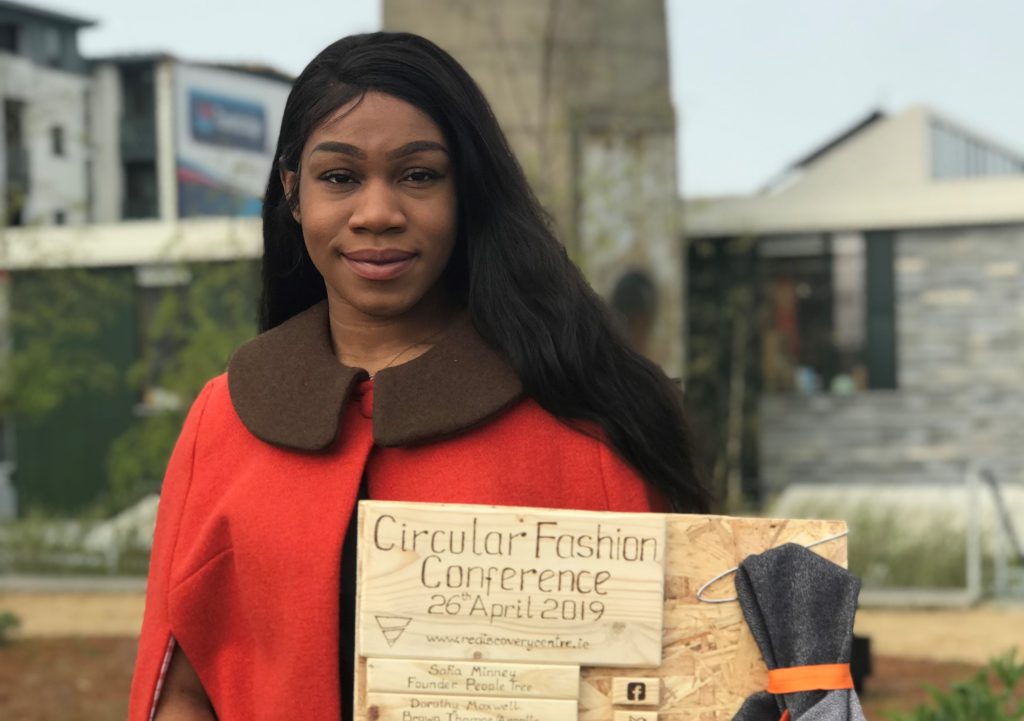
Circular Fashion Conference
Smith referred to high
street campaigns to reduce the industry’s environmental impact such as Zara’s Join Life
initiative that promotes both sustainable collections and allows customers to
recycle garments they no longer wear in-store.
Another high street
effort Ms Smith highlights is H&M’s Conscious campaign, a collection that uses 100 per cent organic
cotton, Tencel or recycled polyester.
Sustainability Director
at Brown Thomas Dorothy Maxwell also emphasized at the conference that Irish
consumers are “increasingly conscious” and the growth of ethical products and
the resale market is a testament to this.
“The urgency of what
we need to [address climate change] is front and centre all the time,” she
stressed in her presentation.
And for many, such
urgency within an array of elements of fashion – including production, product
care and disposable – can feel overwhelming.
Moran often encounters
this with young designers she comes across and advises designers to start off
with one sustainable element.
“Pick one at the
moment that’s important to you. Whether that’s using organic materials, using
reusable materials, or making sure the product is ethically made,” she advises.
Then, she says, “things will snowball naturally”.
About the Author

The post Circular style: Reaction to the true cost of fast fashion appeared first on Green News Ireland.