


July 26th, 2019
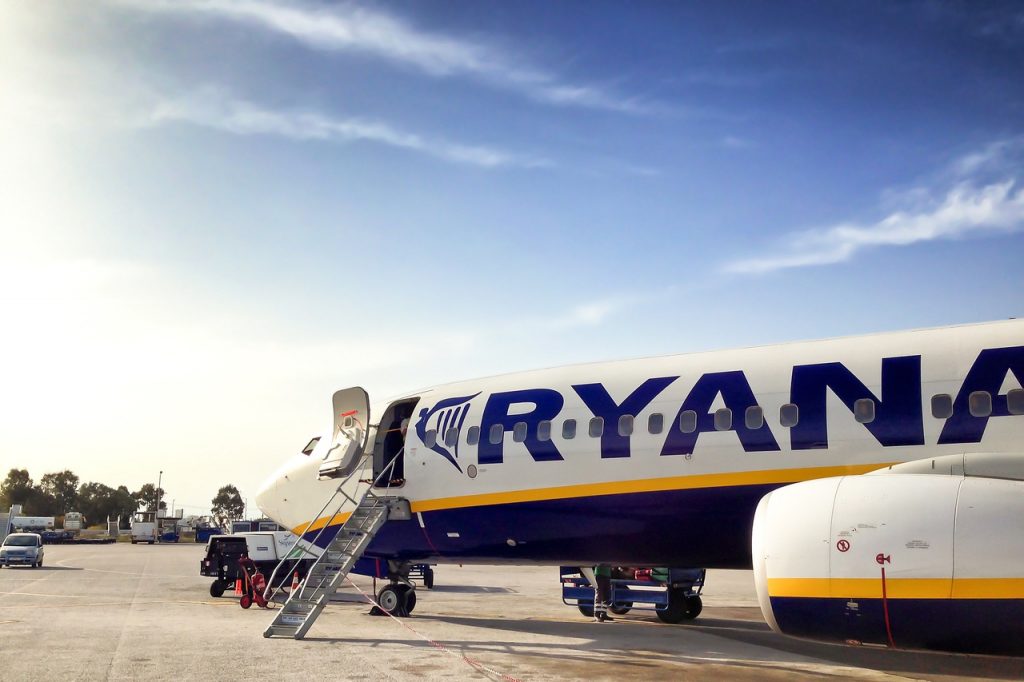
Almost a quarter of EU airports served by Ryanair are “likely” to be loss-making and sustained through subsidies, a new report has found.
According to analysis done by Transport &
Environment (T&E), 52 Ryanair-carrying airports are either documented to be
receiving subsidies or see less than 500,000 passengers pass through its
terminals each year.
Approximately half of the low-cost carrier’s airports receiving subsidies are based in France, and receive state aid from national governments and local authorities, the Brussels-based group found.
While the aid is given to the struggling airports, the authors of the report argue that it is essentially a subsidy to airlines like Ryanair that can then benefit from lower landing and airport charges.
Airports use this financial aid to charge rates below the market level in order to attract airlines, the report states.
The European Commission should end state aid for loss-making airports like “it did for coal mines earlier this decade”, T&E concluded in its assessment. In 2010, the European Commission instructed member states to arrange the gradual shutdown of loss-making coal mines.
Ryanair was contacted for comment but did not respond at the time of publication.
Airline
emissions growing
Earlier this year, Ryanair was named as a “Top Ten” carbon emitter in Europe’s
Emission Trading System (ETS). Since 1990, greenhouse gas emissions from
international aviation have more than doubled and international aviation makes
up 13.3 per cent of greenhouse gas emissions in the EU.
With the industry expected to grow further, emissions from the
European aviation sector are predicted to rise annually between one
and four per cent in the coming decades. If trends continue globally, aviation
may contribute up to 22 per cent of CO2 emissions by 2050.
As well as emitting carbon dioxide, aviation emits pollutants such
as nitrogen oxides and particulate matter. When released at high
altitudes, nitrogen oxides enhance the lining of the ozone layer which leads to
warmer temperatures.
Soot and water vapour emitted by aircraft can create vapour trails in cold air, and
researchers believe the trails could add to the greenhouse effect. At the
same time, jet fuel emissions also set in motion reactions which can destroy
methane, a gas estimated to have a warming effect 84 to 87 times greater than that of CO2 over
a 20 year period.
Research
suggests that aviation also has a significant impact on air quality and may cause
16,000 premature deaths every year due to particulate matter exposure. Almost
half of the premature deaths are attributed to emissions from aircraft landing
and take-off.
EU
regulation missing
Yet, jet fuel remains exempt from taxation in the European Union. When first formed, nearly all airlines were state-owned, resulting in a worldwide network of bilateral air services where states gave each other rights to operation air transport in their sovereign airspace.
This form of regulatory system was enshrined in the 1944 Chicago
convention and created problems during the formation of the EU as the system of
regulation was deemed incompatible with the Union’s founding document, the
Treaty of Rome.
Thereafter, air transport was essentially exempt from EU policies for three decades until a 2003
EU Directive was brought in allowing fuel to be taxed for domestic aviation
subject to a bilateral agreement among member states.
Airlines, however, are still allowed to avoid paying tax on commercial
aircraft fuel and no member states have agreed to increase taxation on kerosene
or gas oil since the Directive came into effect.
Since the beginning of 2012, CO2 emissions from aviation have been
included in the EU Emissions Trading System (ETS), yet flights to and from
non-European Economic Area countries are excluded under a “stop the clock”
provision.
Call for more
taxes
In Ireland, calls for a tax on jet fuel and airline tickets have
been growing louder. In an op-ed for The Irish Times earlier this year,
environmental journalist John Gibbons proposed that a 33 cent per litre tax
on aviation fuel would generate almost €10 billion of revenue within the EU.
Introducing a 15 per cent tax on airline tickets would rake in
another €17 billion per year, Mr Gibbons added. Other European countries
have brought in airline taxes, such as France that announced
this month that it will tax up to €18 per flight ticket from 2020
onwards.
Revenue generated from the tax, the French government said, would
support lower-carbon methods of transport. Earlier this month, the UK launched an initiative that may see
passengers pay an extra “carbon charge” on flights and in 2018, Sweden
introduced a tax on airfare that adds up to €40 on every airline ticket
purchased.
While the EU has tried to shift taxation from labour towards the
environment as a whole, there hasn’t been “positive progress” on the effort,
according to the European Environment Agency (EEA).
The main reason, the agency says, is a combination of the
political obstacles facing tax system change and the “real and perceived
economic and social challenges regarding environmental taxes”.
Environmental taxes include carbon tax, changes on single-use plastic
bags and the landfill levy.
According to the EEA, nine member states shifted taxation from
labour towards the environment between 2003 and 2016, while six countries,
including Ireland, moved in the opposite direction.
The European Commission said that the main barriers to such tax reform are the potential regressive element of an environmental tax, the harm it could cause to the competitiveness of sectors affected, and the administrative and enforcement costs of implementing the taxes.
About the Author

The post Host of EU airlines propped up by subsidies, study finds appeared first on Green News Ireland.