

October 18th, 2019
A Green Party motion to transition our plantation-dominated forestry model to a close-to-nature, continuous cover system passed in the Dáil yesterday.
The motion, that passed by 70 to 38 votes, calls for the Government to push for a more diverse permanent woodland model that supports a wider range of forest types including semi-wild areas and agroforestry on farms.
The motion calls for a rebalancing of
forest premiums and payments to support this strategic shift that will allow
for the restoration of large areas of permanent natural woodlands.
The
Government recently outlined a new planting target of 22 million trees every
year for the next two decades. It is planned that short-rotation conifer
plantations will account for 70 per cent of new afforestation, and the
remaining 30 per cent of the trees will be broadleaves.
At just 11 per cent (770,000
hectares), Ireland has one of the lowest levels of forest cover in Europe, yet
also has one of the highest rates of plantation forestry across the bloc. Only
around two per cent of the country is covered by what is termed native or
semi-natural woodland.
In 2017, Sitka Spruce made up
51 per cent of all trees planted in Ireland – a total of 343,310 hectares. The
total area of grant-aided afforestation for Sitka and lodgepole pine
increased from 48 per cent in 2004 to 74
per cent in 2018.
The Green Party’s agriculture
spokesperson Councillor Pippa Hackett said that political support for the
motion shows that “politicians are catching up” with those in civil society
calling for a change in our afforestation model.
“It is vital if we want to use forestry
to reduce out impact on the climate that we do it in a way that improves the
environment, and benefits farmers and their farms,” added Cllr Hackett, an
organic mixed livestock farmer from Co Offaly.
“The benefits of the right kind of forestry are multiple. They can improve our air and water, stabilise soils, they can support biodiversity, protect against flooding, shelter livestock, provide a renewable resource of wood and food, and take carbon from our atmosphere,” she said.
Community and farmer role
The motion also calls for the Government to
establish local forestry plans with civil society input and environmental
assessments to ensure there are no significant biodiversity impacts from
planting.
This follows concerns in Co Leitrim
over the level of plantations cropping up in the county, a large percentage of
which is owned by outside investors from other counties or from abroad.
The county is the most forested in the country with
almost 19 per cent (30,000 hectares) of all land under forest cover,
substantially higher than the national average of 11 per cent. Conifers account
for 70 per cent of trees planted.
The
Greens also want to see the Government outline financial support for
small-scale mixed woodland forests in each county, and to supports farmers to
plant a hectare of native woodland on their farms within the next five years.
There
is also the potential for higher value quality wood products from Irish
forests, the motion states, with the Greens calling for the promotion of wood
materials for new building construction.
The motion also calls for more support for community ownership and investment in afforestation, as well as a “radical expansion” of urban tree planting. There have been a number of high-profile cases of local authority removal of urban trees over the past year.
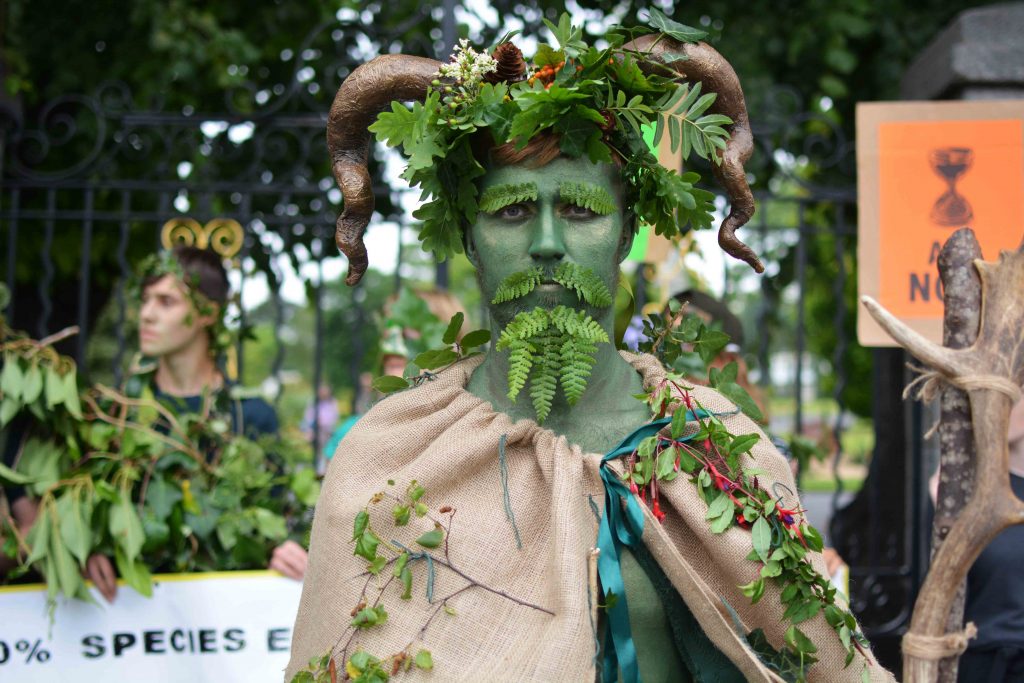
Carbon source and impact on biodiversity
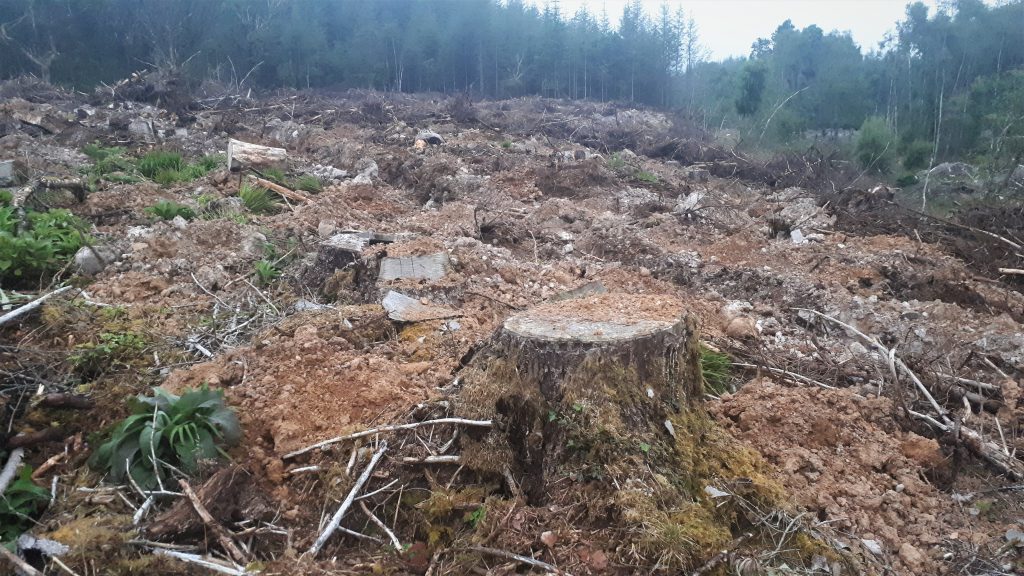
Critics argue that the plantation
model also has little long term value as a carbon sink as planting rates are failing
to match harvesting rates.
A recent
report from the Department of Agriculture shows that managed forest land
moved from a carbon sink to a source in 2017 largely due to an increase in
harvesting rates, a declining age class of forest areas and an increase in
emissions from organic soils due to drainage at plantations.
In general, plantation forestry also supports a lower diversity
and abundance of bird
species relative to native broadleaves and supports
fewer specialist species.
The NPWS has found that our current
forestry model is a significant threat and pressure on habitats and species
protected under European law.
The Environmental Protection Agency has also found that
afforestation and harvesting can impact soils and biodiversity, as well as water
quality through acidification and nutrient run-off.
A recent
UCD-led study of forestry in Co Leitrim found that only 61 per cent of sites
were visited in 2018 to assess if it was good for planting or was
environmentally suitable in advance of the Forest Service issuing an
afforestation licence.
Just over two-thirds of sites were subject to field inspection
before final grant payment was made by the State, the study said.
The researchers also found that the field inspection rate for felling licence applications was only six per cent in 2018, even though the county had the second-highest level (126) of felling licences that year. The average national rate was 19 per cent in 2018.
About the Author

The post Greens motion for new Irish forestry model passes appeared first on Green News Ireland.