

January 10th, 2020
South Dublin residents will protest this Sunday against plans to straighten out the Poddle River for flood defence works that critics argue will negatively impact wildlife in two nearby parks.
The plan developed by South Dublin County Council (SDCC), Dublin County Council and the Office of Public Works (OPW) would see a flood defence wall built along the historic river.
The
works will involve the removal of trees on the riverbank, as well as the straightening
of the river to encourage the faster flow of water.
The OPW has faced heavy criticism for its flood relief policy in other counties from local groups, national environmental organisations, and ecologists.
Local residents from Kimmage and Crumlin, who have come together under the Save the Poddle Wildlife Sanctuary umbrella, argue that the hard engineering solution will impact the “little known treasures” of St Martin’s Park and Ravensdale Park just 500 meters.
The two small parks are home to various species of birds, including the kingfisher, grey heron, sparrow hawks, swifts, kestrels, and swallows and a number of other feathered species.
The scheme website states that the works will protect properties at risk from the “one in 100 year fluvial (river) flood taking into account the anticipated increase inflows attributable to climate change”.
Local residents, however, are adamant that any flooding problems associated with the river are due to a lack of maintenance of culverts that allows water to flow under roads.
They
argue that there have been no significant flooding issues since local
residents, headed by the Crumlin Clean Up
Group, took on the duty of clearing drains and removing rubbish from the
river.
Save
the Poddle Wildlife Sanctuary member and mother Roisin McAleer said
that the plans will impact the “very little green space left” in either Kimmage
or Crumlin.
“There’s nowhere for our kids to play, or learn about nature, or even anywhere else to see some of the wonderful creatures that live here in this small reserve,” she said.
“We are becoming very separated from nature and council plans to build walls, instead of bridges further divides people from people and divorces people from nature.”
Two public information events on the scheme will be held in the Mount Argus Community Centre on 16 January and at the Tasc Pavillion in Tymon Park on 20 January.
Tallaght wetland case
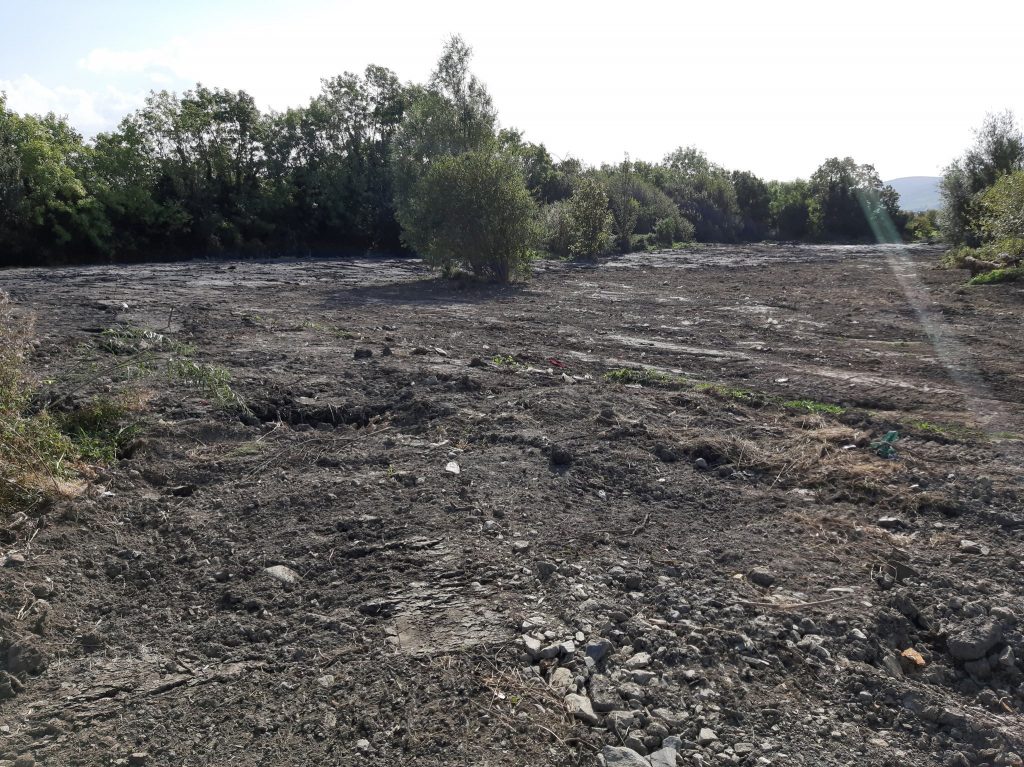
SDCC has come under criticism in recent months over its position on protecting biodiversity spots, including the much-criticised dumping of silt on a wetland area in a small corner of Sean Walsh Memorial Park in Tallaght last October.
The former waste ground regenerated naturally over many years and
was bursting with wildlife including the protected smooth
newt and common
frog, as well as the critically endangered European
eel.
The Council said that it was responsible for the dumping of material on the site as “part of a planned process” to remove silt and rubbish from man-made lakes in the park.
Internal documents released to Noteworthy last November under Access to Information on the Environmental regulations, however, show that it was never the council’s intention to spread the excavated material.
Instead, miscommunication with a contracting company, hired for over €20,500 to carry out works in the park, lead to the mounding of the soil at the wetland site.
Further documents released
to The Irish Times indicate that the
local authority has now shelved plans to enhance the wetland area following the
incident, despite seeking funding from the National Parks and Wildlife Service
in May 2019 for a wetland enhancement project in the park.
Collie Ennis, a science officer with the Herpetological Society of Ireland (HSI), a volunteer group of amphibian and reptile experts what was tending to the wetland area, said that he would like to know “why SDCC applied for a grant to a wetland that, according to them in earlier statements, never existed”.
Mr Ennis, who discovered the “little miracle” last year while
surveying the area for potential pond sites, told The Green News that there is also no justifiable reason as to why some form of mitigation work is not carried out immediately.
“While it’s positive to hear that an ecologist
is working on the site I can’t help but feel cynical about the timeline
involved,” he said.
“I’m concerned that this could be a can-kicking exercise on the part of SDCC in the hope that this issue will be forgotten about by the public and they can eventually walk away from it down the line… The time to act on restoring valuable breeding ponds that were destroyed is now”.
About the Author

The post Locals to protest Poddle River flood defence plans over wildlife concerns appeared first on Green News Ireland.