

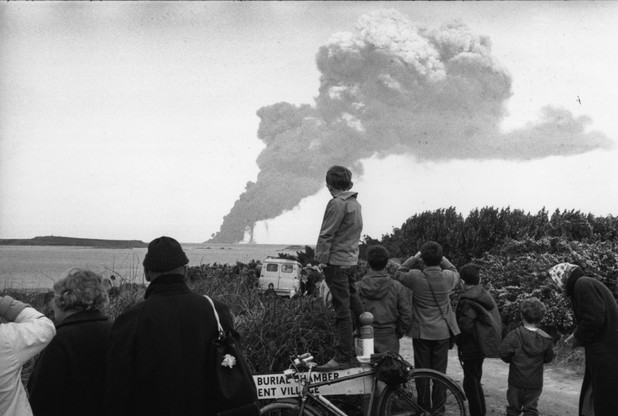
This week marks the 50th anniversary of one of the worst environmental disasters in the Westcountry’s history.
In 1967 tens of thousands of seabirds were killed in south west England in one of the world’s worst marine pollution incidents.
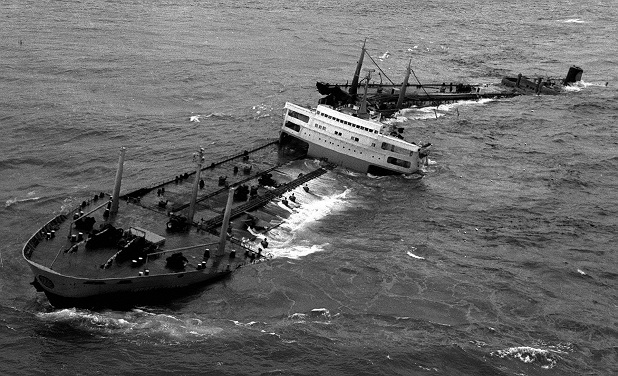
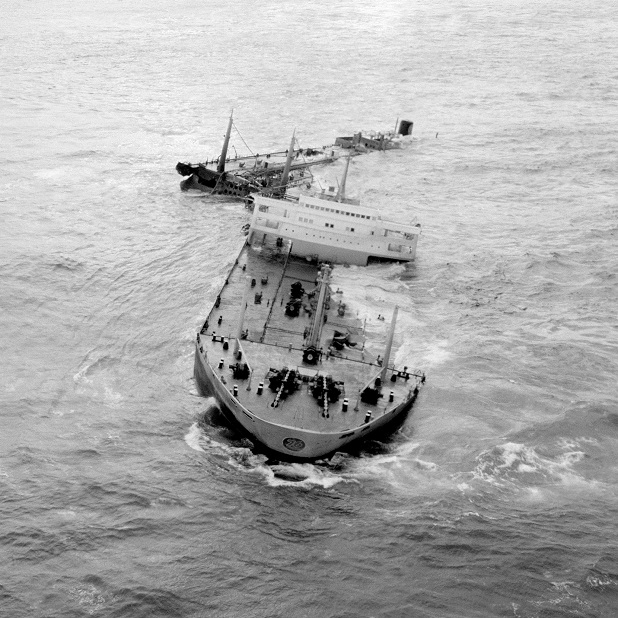
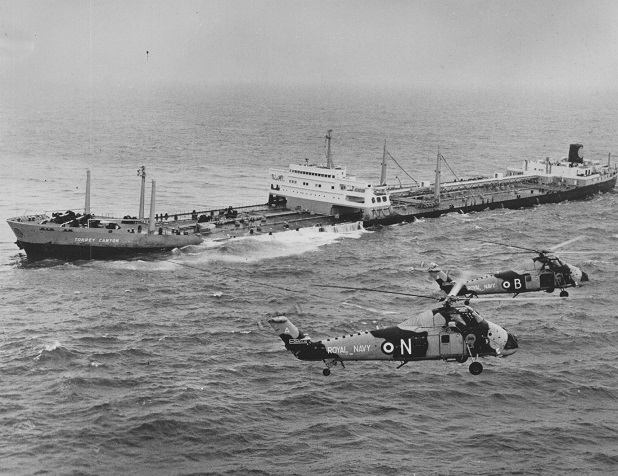
The Torrey Canyon hit the Seven Stones reef between the Isles of Scilly in Cornwall on March 18, 1967, spilling her 120,000 ton cargo of crude oil into the sea.
Incident led to international legislation to protect the marine environment from shipping-related pollution. But the risk remains
The day the sea turned black
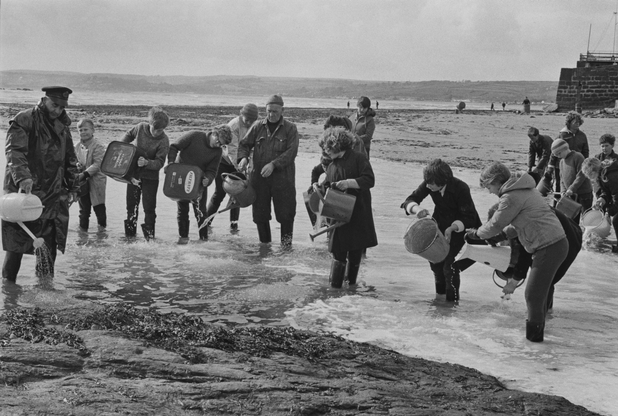
The Torrey Canyon was the world’s first major marine oil pollution incident. A conservative estimate is that the oil and the extremely toxic detergents used in `clean up’ attempts killed more than 30,000 birds, mostly guillemots and razorbills.
Dead and dying birds were washed up on the coastlines of Cornwall, Guernsey and Brittany over many weeks. More than 12,300 individual bird casualties were recorded, including guillemots, razorbills, puffins, shags, great northern divers, red throated divers, gannets, black-necked grebe, great skua and gulls.
In addition to those killed from the effects of oil pollution, post mortem results from some birds described ” lungs choked with detergent froth, feathers singed, and in many cases badly blistered legs and beaks“.
Most affected birds died. Other affected marine life included particularly fauna and flora of the intertidal zone, including limpets, sea anemones, sandhoppers, razorshells, mussels, cockles, crabs and seaweed. It was concluded that, had the oil been left to natural processes, rocky shores would have recovered within three years whilst the use of high volumes of undiluted and highly toxic detergents meant environmental recovery took a decade.
Read next: The story behind the tragic businessman who dealth with millions on a daily basis
What it was like to watch the disaster develop
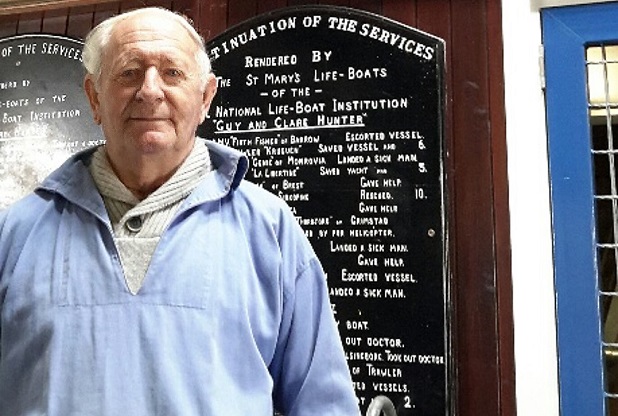
The sea was like a bowl of mulligatawny soup and the smell was like opening a tube of glue,” says Rodney Terry. “Oil, brown and thick – the crew and the lifeboat were plastered in it.”
Rodney is the last living member of the crew of the St Mary’s lifeboat, Guy and Clare Hunter, that recorded a staggering unbroken 32 and a half hours standing by the wreck of the massive Liberian-registered oil tanker Torrey Canyon wrecked on the Sevenstones 50 years ago today.
Now 81, Rodney is dredging up recollections of that long-ago Saturday that gripped the world’s attention. It was an unprecedented maritime pollution crisis, and at the time the costliest-ever shipping disaster.
“I nearly didn’t make it,” said Rodney. “I was skipper of the off-island launch Tean at the time and was collecting end-of-season flower boxes from Bryher and Tresco to put aboard the Scillonian, which in those days sailed from St Mary’s at 9am. We had just got alongside the ship when the lifeboat rockets went. The lifeboat came off the slip and over to the quay, where it landed a coastguard who had been on board, and picked me up.”
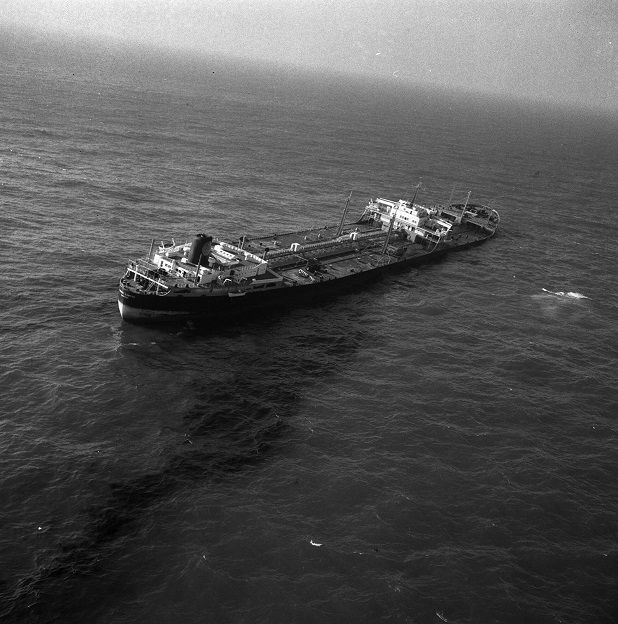
His first impression on arriving at the wreck site was the sheer size of the tanker.
“The thing was massive compared to what was generally going around then,” he said. “She had been lengthened from 810ft to 974ft. She was listing on her starboard side. The disaster had actually been predicted moments before the vessel struck the Sevenstones. Up at St Mary’s airport, Charlie Tresize saw her going by close in and remarked ‘if she keeps on this tack she’ll end up on the Stones’. And BEA helicopter pilot Captain Summerbee is said to have been the first to alert the authorities of the wreck. When en route to the islands he reported seeing her off the Sevenstones apparently discharging oil.”
[embedded content]
Rodney says the tanker – with a cargo of 100,000 tons (730,000 barrels) of Kuwaiti crude oil was bound for the refineries at Milford Haven – actually came within a whisker of missing the notorious reef.
“There was 60ft of water on the side away from the one which hit the one rock,” he said. “She was that close to having missed it.”
The reason for the disaster – or one of the them – was the automatic pilot.
“It was new in those days,” said Rodney. “There was a lever to disengage the automatic steering to manual. The captain had done that and gone back into the chart room. The next thing that happened was the man at the wheel was yelling his head off that there was no response from the wheel. It was still on automatic, hadn’t been disconnected, and he couldn’t alter the course.”
Sadly, lessons weren’t learned from the Torrey Canyon experience. A full 22 years after the disaster, in March 1989, the Exxon Valdez was using the same automatic steering system when she struck Bligh Reef in Alaska’s Prince William Sound, spilling 10.8 million gallons of crude oil into the ocean. It is considered to be one of the most devastating human-caused environmental disasters of all time.
Rodney describes the devastating effect of crude oil on anything that comes into contact with it. The lifeboat non-slip tread-mark deck started to curl up at the edges where the oil had melted it or had a reaction with the glue, while the paintwork was going the same way. The vessel was later sent for a total refit.
“The oil was spilling in a massive slick,” said Rodney. “After the splashing of the sea, the oiled water was strangely quiet and silent.”
Read next: Charity watchdog probe serious concerns at social club
More drama came when taking off some 14 or so of the mainly Italian crew from the tanker before transferring them to the Trinity House ship Stella which had been standing off. One man was hesitant “as there was a massive rise and fall in the waves”, recalls Rodney. “One minute the lifeboat was level, the next 10ft down,” he said. “To jump from a big ship into a small one is not the easiest thing to do. We said ‘jump’ when the lifeboat rose but he jumped as she went down. He went straight into the drink, between the lifeboat and the ship.”
There was a real fear he would be crushed. between the giant tanker and the lifeboat.
“Luckily, he got away with it,” says Rodney. “Someone in the stern grabbed him with a boat hook and got him aboard.”
Two incidents stand out vividly in Rodney’s memory: the strange movement of the tanker’s deck and – bizarrely – onion soup.
“Two or three of us got aboard the tanker, whose deck at the time was difficult to describe. It was ‘undulating’ with the swell. We couldn’t believe it.
“The onion soup episode came via a welcome food delivery from the tug, Utretch. Frankly, we were bored with hanging around, and cold as there was no heating aboard. All we had aboard the lifeboat was emergency stuff – cracker biscuits and tinned bully beef.”
After the lifeboat returned to port, following her marathon stint, Rodney says felt more like going to work than staying home.
“I know it sounds strange but I just couldn’t have slept after that,” he says.
As it happened, it would be a while before he was able to sleep. Just as he was heading home, the local doctor – who doubled up as lifeboat branch secretary – drew up in his Sunbeam Talbot sports car.
“Jump in,” he said. “You’re wanted again.”
There had been an explosion on the tanker and a doctor was needed.
“You’ve never been up here before at 60mph, have you?” he asked.
“No,” Rodney replied. “And I don’t want to.”
“Well you’re going to,” said the medic, as, at a rate of knots, they shot up The Strand to the lifeboat house. The lifeboat launched but got only as far as St Martin’s Head when it was learned the casualty – who later died – had been evacuated by helicopter.
And his wasn’t the only fatality in the Torrey Canyon disaster. The environmental cost of the oil spill was huge. Seabird deaths, mainly around the Cornish coast, were estimated as being at least 75,000. The coastlines of France, Guernsey and Spain were also affected.
Rodney, a lifeboatman for 26 years, went on to become the boat’s coxswain, a post he held for six years.
The oil spill was finally dealt with when the Government ordered the wreck to be set on fire. Air strikes involving the Fleet Air Arm and Royal Air Force initially dropped 1,000lb of bombs on the ship, along with cans of jet fuel to fuel the blaze, However, the fire was put out by high seas. Bombing – involving a total of 161 bombs, 16 rockets, 1,500 tons of napalm and 44,500 litres of kerosene – continued until she finally slipped beneath the waves. Attempts to contain the oil using foam-filled booms were largely unsuccessful. An inquiry in Liberia, where the ship was registered, found ship’s master Pastrengo Rugiati was to blame, because he took a shortcut to save time to get to Milford Haven. The Torrey Canyon now lies at a depth of 30 metres.
Read next: The couple bringing one of the 780 empty homes in Plymouth back to life
The man who saw the tragedy develop
The TV news cameraman who spent days filming the Torrey Canyon disaster has this week been recalling the scenes he captured half a century after the giant tanker struck Pollard’s Rock on Seven Stones reef.
John Kingdom, who worked for Plymouth-based Westward at the time, was in at the final denouement as he filmed the bombing of the 974-foot-long ship from a tiny quarter-light window in the side of a military Hunter jet.
What made his task more difficult was that John, now aged 83, was using a Bolex camera with a wind-up clockwork mechanism. He knew he had just 30 seconds of filming time in which to capture the iconic images which were to mark the beginning of the end of the worst maritime disaster in British history.
At that time the Torrey Canyon was the largest vessel ever to be wrecked when she foundered on the reef on a voyage from Kuwait to Milford Haven in South Wales.
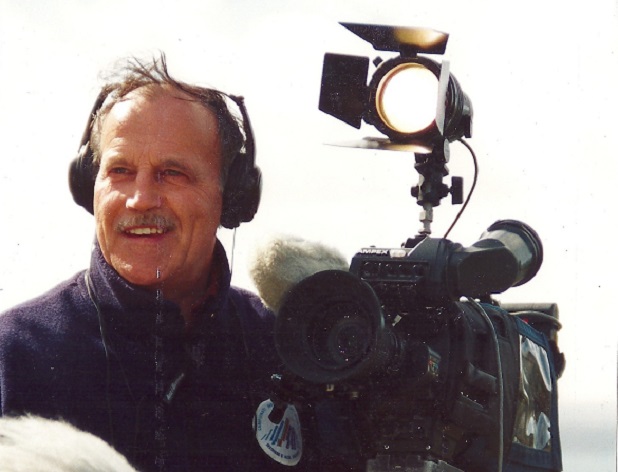
“I was using a Bolex camera and it was a wind-up which ran for 30 seconds – so, when you are alongside a Buccaneer waiting for the bomb to be released, it can be fairly stressful,” John told the Western Morning News.
“I had not been in a jet before – I had been in an aircraft that did stunts over the coast of Cornwall – but this was like being in a very cramped car. All I had to look out of was a quarter light. The pilot said there was a Buccaneer below and one above – then suddenly they both drew alongside us. It was an amazing sensation.
“There were puffy clouds we we’re flying through and I thought: how on earth are we not going to hit each other? But in some ways it turned out to be the best day of my life,” said John.
“We followed the aircraft down and saw the bomb release – and we saw the initial explosion – but we had to pull away quickly and the G-forces were phenomenal. Back then the most difficult part of any day was driving back with film which had to be processed and hopefully shown that evening. You’d shoot better stuff on your mobile phone today. The stuff I did for the bombing went off to ITN in London.”
John had spent the previous days filming various aspects of the Torrey Canyon disaster. “From the time it happened I was mainly filming the cleaning of the beaches and so on – and also going up in helicopters filming the clearing of the oil slicks.”
The Government, in an effort to reduce the size of the oil spill, had decided to set the wreck on fire using air strikes from the Fleet Air Arm and Royal Air Force. On March 28, 1967, Buccaneers from RNAS Lossiemouth dropped 1,000lb bombs on the ship. Afterwards RAF Hawker Hunter from RAF Chivenor dropped cans of jet fuel, to fuel the blaze.
At first the scheme failed because the fire was put out by crashing Atlantic seas. Further strikes, by Sea Vixens from RNAS Yeovilton and Buccaneers from the RNAS Brawdy, were needed to re-ignite the oil, as well as RAF Hunters using napalm. Bombing continued the next day – in all a total of 161 bombs, 16 rockets, 1,500 tons of napalm and 44,500 litres of kerosene were used.
Why the tragedy could happen all over again
Now, 50 years later, the risk of a large scale oil spill remains, says the RSPB.
“The Torrey Canyon was the world’s first major marine oil pollution incident,” said RSPB spokesman Tony Whitehead. “A conservative estimate is that the oil and the extremely toxic detergents used in clean up attempts killed more than 30,000 birds, mostly guillemots and razorbills.”
Dead and dying birds were washed up on the coastlines of Cornwall, Guernsey and Brittany over many weeks. More than 12,300 dead seabirds were recorded, including guillemots, razorbills, puffins, shags, great northern divers, red throated divers, gannets, black-necked grebe, great skua and gulls.
In addition to those killed from the effects of oil pollution, post-mortem results from some birds described “lungs choked with detergent froth, feathers singed, and in many cases badly blistered legs and beaks”.
“Most affected birds died,” said Mr Whitehead. “Other affected marine life included particularly fauna and flora of the intertidal zone, including limpets, sea anemones, sandhoppers, razorshells, mussels, cockles, crabs and seaweed. It was concluded that, had the oil been left to natural processes, rocky shores would have recovered within three years whilst the use of high volumes of undiluted and highly toxic detergents meant environmental recovery took a decade.
“The tragedy was a watershed moment for the public and government,” Mr Whitehead said. “It highlighted the risk that oil pollution (and inappropriate response action) poses to the marine environment and its wildlife, the most obvious victims being seabirds.
“It also revealed shortcomings in tanker design and shipping practices and the lack of effective response plans. It was the catalyst for regulation to reduce the risk of such incidents reoccurring and focused public interest on the value and vulnerability of the marine environment and seabirds in particular.”
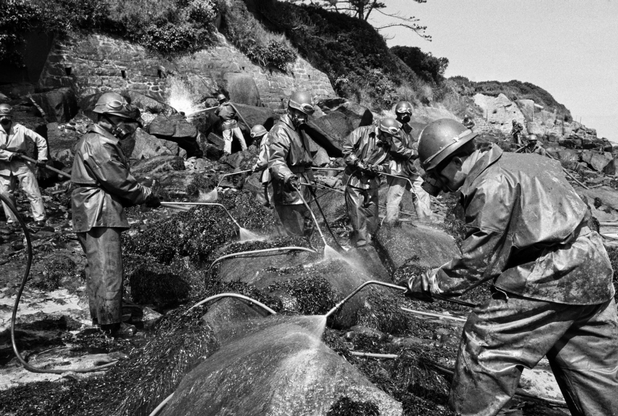
As a consequence, the UK government and other countries acted with greater urgency to improve policies and practices for preventing and responding to oil spills.
Mr Whitehead added: “While legislative and other changes over the decades since (sadly often prompted by other marine pollution incidents involving shipping) resulted in various improvements to tanker design and greater control over shipping routes, the risk of marine pollution can never be eliminated.”
The Westcountry’s waters are very much in the firing line. The English Channel and the Western Approaches are the busiest shipping routes in the world and cargoes shipped now include increasing volumes of Hazardous Noxious Substances (HNS). Marine pollution is still a problem, as has been demonstrated by several major incidents in recent years.
In South West waters a minimum of 2,294 birds were recorded oiled by the wrecking of the Napoli in 2007 in Lyme Bay, while in 2013 the mysterious PIB incidents resulted in the deaths of at least 4,000 birds.
Mr Whitehead said that seabirds face many threats in the modern world: “Pollution from shipping is another pressure. Incidents such as the Torrey Canyon remind us of the vulnerability of seabirds to pollution and the responsibility of all countries to minimise the risks through measures such as strong international legislation.
“Prevention really is the only cure when it comes to oil pollution.”
Who was to blame?
A later inquiry in Liberia concluded that the shipmaster, Pastrengo Rugiati, was to blame. The inquiry heard that he decided to take a shortcut in an effort to get to Milford Haven, with plenty of time to spare, after initially “lying in” and missing a left turn before the Isles of Scilly. A design fault also meant that the helmsman was unaware that the steering selector switch had been accidentally left on autopilot, meaning he was unable to carry out a timely turn to go through the shipping channel.
Another question asked was why a junior officer was in charge of navigation duties, but as Penlee Lifeboat’s visits officer Martin Brockman said in a recent lecture: “He had to start his duties at some point.”
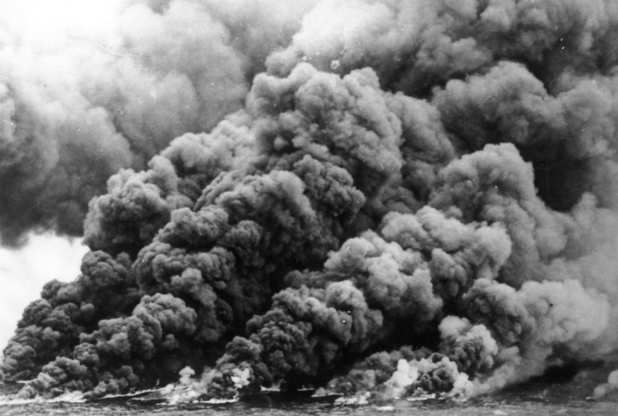
To this day the wreck lies at a depth of 98 feet.
Because of Torrey Canyon the UK Government and other countries acted with greater urgency to improve policies and practices for preventing and responding to oil spills.
One outcome was MARPOL (marine pollution), the International Convention for the Prevention of Pollution from Ships, 1973, one of the most important international marine environmental conventions.
Mr Whitehead added: “While legislative and other changes over the decades since, sadly often prompted by other marine pollution incidents involving shipping, resulted in various improvements to tanker design. Double-hull requirements, for example.
“[It also led to] greater control over shipping routes, for example, the identification of some Marine Environmental High Risk Areas for shipping to avoid, the risk of marine pollution can never be eliminated.”