

Jason Ogulnik for Nature
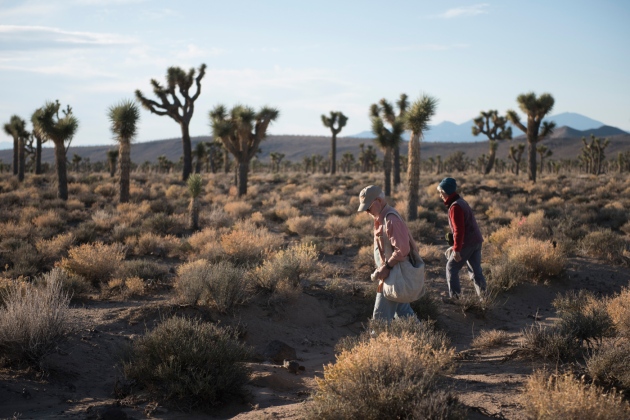
Jim and Carol Patton hunt for kangaroo rats and other desert rodents in Death Valley, California.
Jim Patton brushes a packrat’s furry white belly with a vibrant green marker as his wife, Carol, croons over the animal. “We’re making you beautiful — punk mice!”
Patton, a retired mammologist, is trapping and releasing desert wildlife as part of an ambitious project to repeat surveys conducted by renowned ecologist Joseph Grinnell from 1908 to 1939. Known as the ‘father of field notes’, Grinnell criss-crossed California in his Ford Model T to catalogue its birds and mammals. His descriptions are so complete that researchers today can compare the density and distribution of animal populations then and now.
Grinnell’s records provide an unparalleled baseline for researchers to explore how urbanization, farming, mining and climate change are reshaping the state’s ecosystems. The Grinnell Resurvey Project, run by the University of California, Berkeley, has sought over the past 14 years to capture current conditions, with an eye to quantifying future ecological shifts. The latest phase of the work, which began last month, is focused on cataloguing small mammals in California’s rapidly changing deserts.
“The only way to get a sense of what is happening under climate change, and what to expect in the future, is the kind of work going on in the Grinnell research project,” says Josh Tewksbury, a sustainability scientist at Future Earth, an environmental-research group in Boulder, Colorado. “It’s hard to see how the water boils when you’re in the pot.”
When Grinnell began his project in the early twentieth century, he was struck by California’s varied geography, from snowy mountains to blazing deserts to rocky coasts. Anticipating the state’s inevitable transformation as Americans moved west, he documented the distribution of species in about 700 locations. His team deposited more than 100,000 specimens in natural-history museums, including the skull from one of California’s last grizzly bears (Ursos arctos californicus), as well as 74,000 pages of field notes and 10,000 images.
“The student of the future will have access to the original record of faunal conditions in California,” Grinnell wrote in 1910, two years after he became the first director of Berkeley’s Museum of Vertebrate Zoology. “This value will not, however, be realized until the lapse of many years, maybe a century.”
Image Slideshow
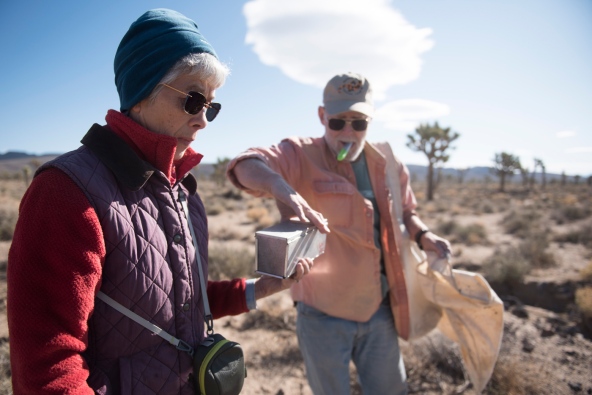
Jim and Carol Patton have trapped rodents around the world for more than 40 years. They began a new season of fieldwork in Death Valley in September, as part of the Grinnell Resurvey Project.
Jason Ogulnik for Nature
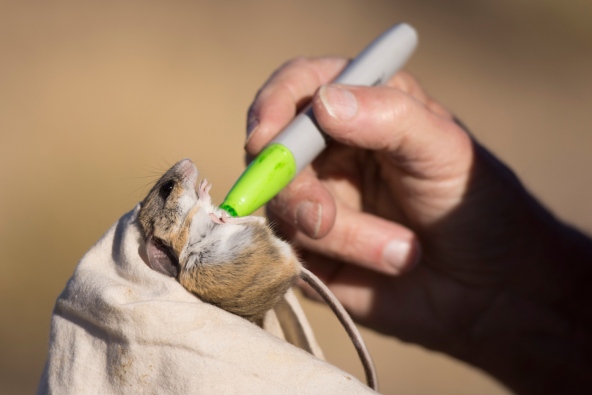
Jim Patton marks a rodent so that he can tell if the same animal shows up again in a trap.
Jason Ogulnik for Nature
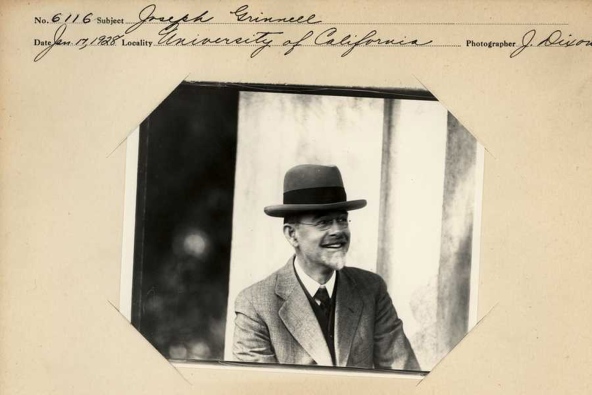
Joseph Grinnell, the first director of the Museum of Vertebrate Zoology at the University of California, Berkeley, documented the state’s flora and fauna in unparalleled detail from 1908 to 1939.
With permission of the Museum of Vertebrate Zoology, UC Berkeley
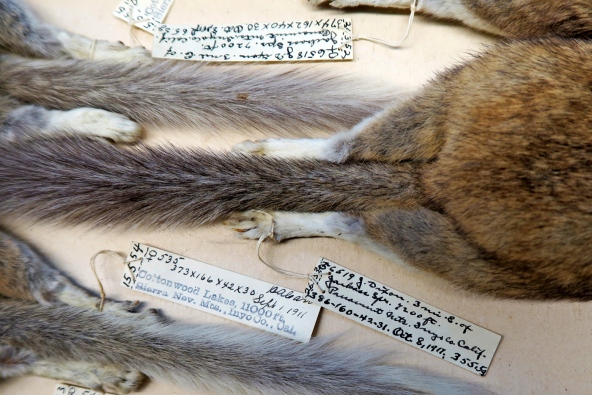
Grinnell and a colleague collected these bushy-tailed woodrats (Neotoma cinerea) near Death Valley, but the species is rarely found in the same locations there today.
With permission of the Museum of Vertebrate Zoology, UC Berkeley