






Commercial pesticides: Not as safe as they seem
This is the first comprehensive review of gaps in risk assessments for adjuvants in pesticide formulations which are not currently subject to safety assessments....

Hawaiian stick spiders re-evolve the same three guises every time they island hop
We don't usually expect evolution to be predictable. But Hawaiian stick spiders of the Ariamnes genus have repeatedly evolved the same distinctive forms, known...

Scientists accurately model the action of aerosols on clouds
Global climate is a tremendously complex phenomenon, and researchers are making painstaking progress, year by year, to try to develop ever more accurate models....

Self-driving robots collect water samples to create snapshots of ocean microbes
For the first time, scientists will deploy a small fleet of long-range autonomous underwater vehicles (LRAUVs) that have the ability to collect and archive...

Marine charities net more than iconic fishery: Massachusetts
Massachusetts boasts one of the most iconic fisheries in the US, but new research suggests that protecting marine coastlines has surpassed commercial fishing as...

Manure could heat your home
Farm manure could be a viable source of renewable energy to help reduce greenhouse gas emissions that cause global warming.

Diverse tropical forests grow fast despite widespread phosphorus limitation
Ecological theory says that poor soils limit the productivity of tropical forests, but adding nutrients as fertilizer rarely increases tree growth, suggesting that productivity...

Sinking land will exacerbate flooding from sea level rise in Bay Area
Hazard maps use estimated sea level rise due to climate change to determine flooding risk for today's shoreline, but don't take into account that...

Animals shield their families from a harsh world
Animals living in volatile habitats can gain major evolutionary benefits by shielding their families from the changing environment, new research suggests. Biologists investigated an...

Diamond discovery under pressure
For the first time, scientists have found Earth's fourth most abundant mineral -- calcium silicate perovskite -- at Earth's surface.
Latest news


Popular Articles

Gorillas, rhinos, lions and more will soon become extinct without immediate action
A report by 43 wildlife experts warns that without changes now, many of Earth's most iconic species will be lost forever.
Link to full source:...

Do you see a devil in this orchid?
Named for 'el diablo' himself, a new and extremely rare orchid species reveals a wicked heart.
Link to full source: Do you see a devil...

Florida man arrested for stealing sea turtle eggs
He's given a whole new meaning to "poached eggs."
Link to full source: Florida man arrested for stealing sea turtle eggs
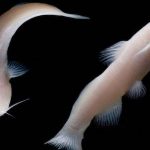
Rare blindcat found in US, could prove water-filled caves connect Texas and Mexico
The extremely rare cave-dwelling albino fish with no eyes, the Mexican blindcat, has previously only been known to exist in Mexico.
Link to full source:...

10 magical places saved by endangered species
In our efforts to save animals at risk of extinction, we've saved some extraordinary places as well.
Link to full source: 10 magical places saved...