






Climate change damages US economy, increases inequality
Unmitigated climate change will make the United States poorer and more unequal, according to a new study. The poorest third of counties could sustain...

Exposure to neonic pesticides results in early death for honeybee workers and queens
Worker and queen honeybees exposed to field realistic levels of neonicotinoids die sooner, reducing the health of the entire colony, biologists have found. The...

Why there are so many species of tropical trees and other organisms
Why does biodiversity grade from exuberance at the equator through moderation at mid-latitudes toward monotony at higher ones? Data from an international network of...

Industrial farming disrupts burn-regrowth cycle in grasslands
The world's open grasslands and the beneficial fires that sustain them have shrunk rapidly over the past two decades, due to a massive increase...

Cellulosic biofuels can benefit the environment if managed correctly
Could cellulosic biofuels -- or liquid energy derived from grasses and wood -- become a green fuel of the future, providing an environmentally sustainable...

Exciting new material uses solar energy to remove human-made dye pollutants from water
A novel composite material shows promise as a catalyst for the degradation of environmentally-harmful synthetic dye pollutants, which are released at a rate of...

Wildlife of northern Central African Republic in danger
The first aerial assessment of the impact of Central African Republic's recent conflict on wildlife and other natural resources in the northern part of...

Researchers discover the most abundant viruses in Earth’s oceans
Forty-four of the most abundant new viruses in all the Earth's oceans have been identified by scientists. The finding has been achieved thanks to...

A wave’s ‘sweet spot’ revealed
For surfers, finding the 'sweet spot,' the most powerful part of the wave, is part of the thrill and the challenge. Now a researcher...

Bumble bees make a beeline for larger flowers
Bumble bees create foraging routes by using their experience to select nectar-rich, high-rewarding flowers. A study now suggests that bees actually forage more efficiently...
Latest news


Popular Articles

Gorillas, rhinos, lions and more will soon become extinct without immediate action
A report by 43 wildlife experts warns that without changes now, many of Earth's most iconic species will be lost forever.
Link to full source:...

Do you see a devil in this orchid?
Named for 'el diablo' himself, a new and extremely rare orchid species reveals a wicked heart.
Link to full source: Do you see a devil...

Florida man arrested for stealing sea turtle eggs
He's given a whole new meaning to "poached eggs."
Link to full source: Florida man arrested for stealing sea turtle eggs
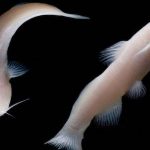
Rare blindcat found in US, could prove water-filled caves connect Texas and Mexico
The extremely rare cave-dwelling albino fish with no eyes, the Mexican blindcat, has previously only been known to exist in Mexico.
Link to full source:...

10 magical places saved by endangered species
In our efforts to save animals at risk of extinction, we've saved some extraordinary places as well.
Link to full source: 10 magical places saved...