






Climate change is making lakes turn green-brown
If global warming persists, blue lakes worldwide are at risk of turning green-brown, according to a new study which presents the a global inventory...

Termites may have a larger role in future ecosystems
A tropical biologist led an international research study to investigate termite and microbial wood discovery and decay.

Solvent study solves solar cell durability puzzle
The manufacture of high-efficiency solar cells with layers of 2D and 3D perovskites may be simplified by solvents that allow solution deposition of one...

It may already be too late to meet UN genetic diversity target, but new...
Climate change and habitat destruction may have already caused the loss of more than one-tenth of the world's terrestrial genetic diversity, according to new...

Deepest scientific ocean drilling sheds light on Japan’s next great earthquake
Scientists who drilled deeper into an undersea earthquake fault than ever before have found that the tectonic stress in Japan's Nankai subduction zone is...

How biologists are making fieldwork more equitable
Biologists share their process for crafting a manual for field research that prioritizes safety for researchers from marginalized groups.

Lab grows macroscale, modular materials from bacteria
Bioscientists turn bacteria into self-assembling building blocks. The macroscale engineered living materials they form could be used to soak up targeted contaminants from the...

Detailed insight into friction: How objects start to slide
Chemists and physicists shed light on a crucial aspect of friction: how things begin to slide. Using fluorescence microscopy and dedicated fluorescent molecules, they...

Researchers map streamflow alterations to gauge human impact on ecosystems
Altering streamflow can endanger the ecosystems that rely on it, but researchers have lacked data on how human infrastructure has impacted streamflow in the...

Biologists unveil clues to evolutionary origins of brown-colored algae for health, biofuels research
Biologists have unveiled foundational new insights into the evolutionary steps these algae took to make their novel brown pigments, which are called fucoxanthin.
Latest news


Popular Articles

Gorillas, rhinos, lions and more will soon become extinct without immediate action
A report by 43 wildlife experts warns that without changes now, many of Earth's most iconic species will be lost forever.
Link to full source:...

Do you see a devil in this orchid?
Named for 'el diablo' himself, a new and extremely rare orchid species reveals a wicked heart.
Link to full source: Do you see a devil...

Florida man arrested for stealing sea turtle eggs
He's given a whole new meaning to "poached eggs."
Link to full source: Florida man arrested for stealing sea turtle eggs
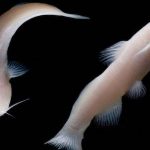
Rare blindcat found in US, could prove water-filled caves connect Texas and Mexico
The extremely rare cave-dwelling albino fish with no eyes, the Mexican blindcat, has previously only been known to exist in Mexico.
Link to full source:...

10 magical places saved by endangered species
In our efforts to save animals at risk of extinction, we've saved some extraordinary places as well.
Link to full source: 10 magical places saved...