






Octopuses rewire their brains to adapt to seasonal temperature shifts
Octopuses don't thermoregulate, so their powerful brains are exposed to -- and potentially threatened by -- changes in temperature. Researchers report that two-spot octopuses...

Ancient genomes show that the farming lifestyle in northwestern Africa was ignited by oversea-migrants...
A genomic analysis of ancient human remains from Morocco in northwest Africa revealed that food production was introduced by Neolithic European and Levantine migrants...

Water molecules define the materials around us
A new paper argues that materials like wood, bacteria, and fungi belong to a newly identified class of matter, 'hydration solids.' The new findings...

Scientists use seaweed to create new material that can store heat for reuse
Scientists have created a new material derived from seaweed that can store heat for re-use. It could be used to capture summer sun for...

Measuring greenhouse gas from ponds improves climate predictions
Shallow lakes and ponds emit significant amounts of greenhouse gases into the atmosphere, but emissions from these systems vary considerably and are not well...

Coral disease tripled in the last 25 years. Three-quarters will likely be diseased by...
Research suggests warming temperatures will see nearly 80 per cent of coral in reefs diseased in the next 80 years.

Bubble, bubble, more earthquake trouble? Geoscientists study Alaska’s Denali fault
Geochemists report findings from collected and analyzed helium and carbon isotopic data from springs along a nearly 250-mile segment of Alaska's Denali Fault. The...

When pigeons dream
Dreams have been considered a hallmark of human sleep for a long time. Latest findings, however, suggest that when pigeons sleep, they might experience...

Older trees accumulate more mutations than their younger counterparts
A study of the relationship between the growth rate of tropical trees and the frequency of genetic mutations they accumulate suggests that older, long-lived...

The problems with coal ash start smaller than anyone thought
Burning coal doesn't only pollute the air. The resulting ash can leach toxic chemicals into the local environments where it's kept. New research shows...
Latest news


Popular Articles

Gorillas, rhinos, lions and more will soon become extinct without immediate action
A report by 43 wildlife experts warns that without changes now, many of Earth's most iconic species will be lost forever.
Link to full source:...

Do you see a devil in this orchid?
Named for 'el diablo' himself, a new and extremely rare orchid species reveals a wicked heart.
Link to full source: Do you see a devil...

Florida man arrested for stealing sea turtle eggs
He's given a whole new meaning to "poached eggs."
Link to full source: Florida man arrested for stealing sea turtle eggs
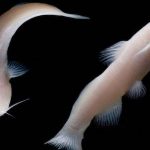
Rare blindcat found in US, could prove water-filled caves connect Texas and Mexico
The extremely rare cave-dwelling albino fish with no eyes, the Mexican blindcat, has previously only been known to exist in Mexico.
Link to full source:...

10 magical places saved by endangered species
In our efforts to save animals at risk of extinction, we've saved some extraordinary places as well.
Link to full source: 10 magical places saved...