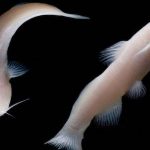


Research using lakes and ponds as model systems contributes both to addressing the freshwater biodiversity crisis and developing general theories and frameworks for understanding how biological systems respond to climate change and other anthropogenic stressors.
This is a preview of subscription content, access via your institution
Access options
Access Nature and 54 other Nature Portfolio journals
Get Nature+, our best-value online-access subscription
$29.99 per month
cancel any time
Subscribe to this journal
Receive 12 print issues and online access
$209.00 per year
only $17.42 per issue
Rent or buy this article
Get just this article for as long as you need it
$39.95
Prices may be subject to local taxes which are calculated during checkout
References
-
Dudgeon, D. Curr. Biol. 29, 960–967 (2019).
-
Loewen, C. J. G., Strecker, A. L., Gilbert, B. & Jackson, D. A. Glob. Chang. Biol. 26, 4937–4951 (2020).
-
Morris, O. F. et al. Ecol. Lett. 25, 2540–2551 (2022).
-
Heino, J. et al. Biol. Rev. 96, 89–106 (2021).
-
Pinksy, M. L., Eikeset, A. M., McCauley, D. J., Payne, J. L. & Sunday, J. M. Nature 569, 108–111 (2019).
-
Loewen, C. J. G. et al. Glob. Ecol. Biogeogr. 31, 233–246 (2022).
-
Johnson, L. E. & Padilla, D. K. Biol. Conserv. 78, 23–33 (1996).
-
Bartley, T. J. et al. Nat. Ecol. Evol. 3, 345–354 (2019).
-
Williamson, C. E., Dodds, W., Kratz, T. K. & Palmer, M. A. Front. Ecol. Environ. 6, 247–254 (2008).
-
Smith, C. L. & Powell, C. R. The Summer Fish Communities of Brier Creek, Marshall County, Oklahoma; No. 2458 (American Museum of Natural History, 1971).
-
Cavicchioli, R. et al. Nat. Rev. Microbiol. 17, 569–586 (2019).
-
Patton, A. H. et al. Proc. Natl Acad. Sci. USA 118, e2024451118 (2021).
-
Hutchinson, G. E. Am. Naturalist 95, 882 (1961).
-
Huot, Y. et al. Sci. Tot. Environ. 695, 133668 (2019).
-
Poikane, S. et al. Sci. Tot. Environ. 695, 133888 (2019).
-
Hampton, S. E. et al. Ecol. Lett. 20, 98–111 (2017).
-
Loewen, C. J. G., Jackson, D. A. & Gilbert, B. Glob. Chang. Biol. 29, 603–617 (2023).
-
Kruk, C., Devercelli, M. & Huszar, V. L. Hydrobiologia 848, 113–129 (2020).
-
McGill, B. J., Enquist, B. J., Weiher, E. & Westoby, M. Trends Ecol. Evol. 21, 178–185 (2006).
-
Carpenter, S. R., Fisher, S. G., Grimm, N. B. & Kitchell, J. F. Annu. Rev. Ecol. System. 23, 119–139 (1992).
Author information
Ethics declarations
Competing interests
The author declares no competing interests.
Rights and permissions
About this article
Cite this article
Loewen, C.J.G. Lakes as model systems for understanding global change.
Nat. Clim. Chang. (2023). https://doi.org/10.1038/s41558-023-01624-5
-
Published: 23 March 2023
-
DOI: https://doi.org/10.1038/s41558-023-01624-5