

Louisiana’s Mid-Barataria Sediment Diversion project was approved for fast-track status by the federal government in January. But that doesn’t mean the process will move quickly.
The timeline laid out by federal agencies shows that permits for the work will be issued Oct. 31, 2022. That is a year longer than state coastal officials expected.
The federal review process is set up to protect the environment, but the long wait will lead to more damage to Louisiana’s coast. “During that additional time, critical wetlands will be lost in Barataria Basin,” the state Coastal Protection and Restoration Authority said in a report sent to the Trump administration Friday June 16).
The Mid-Barataria diversion doesn’t even involve federal funding. “It is unreasonable, unwarranted, and unacceptable for the people of Louisiana to be subjected to a prolonged permitting process for a key state-approved restoration project, which does not use federal funds,” CPRA said. We agree, and would add one more: It is unconscionable.
One major problem is that complex restoration projects involve numerous federal agencies that may have different missions — and may issue conflicting decisions.
But there is a better way. The federal government could create a “one stop shop” for regulatory approvals and permitting of large-scale ecosystems projects, CPRA said. That could be done on a regional basis for the Gulf Coast or could include the Outer Banks in North Carolina, the Jersey shoreline and other areas facing similar erosion problems, the report said.
If it were done by region, the federal Gulf Coast Ecosystem Restoration Council could coordinate permitting. The restoration council was set up to oversee the distribution of BP oil spill fines.
Another option would be to set up a “co-located team” for the Gulf Coast made up of members from various federal agencies who would work together on permitting and approval. The Corps of Engineers used a similar approach post-Katrina to fast track the rebuilding of the levee system.
Either the one-stop shop or a team dedicated to getting projects approved would be a significant improvement, CPRA said.
It’s unclear what will happen next. But the Trump administration asked for the state’s input on how to improve the process, which is a good sign.
In March, Gov. Edwards asked President Trump to include five of Louisiana’s major coastal restoration projects in a new federal program to speed up environmental permitting and reviews. In addition to the Mid-Barataria diversion, the projects include the Mid-Breton sediment diversion, Houma Navigation Canal Lock Complex, Calcasieu Salinity Control Measures and River Reintroduction to the Maurepas Swamp.
All five are in line to get money from BP’s oil spill payments and are listed as fast-track projects in the 2017 update of the state’s 50-year coastal master plan. They already have been through scientific review.
President Trump set up the new fast-track system in a January executive order aimed at “expediting environmental reviews and approvals for high priority infrastructure projects.”
Louisiana’s coastal master plan certainly fits that description.
Restoring Louisiana’s coast should be considered a top national priority. “The impacted area is home to half of the country’s oil refineries and pipelines serving 90 percent of the nation’s offshore energy production,” CPRA said. “Louisiana ships the most cargo in the nation along the Mississippi River and its waterways. Louisiana’s wetlands today represent about 40 percent of the wetlands in the continental United States. Louisiana is also home to the most productive fisheries in the continental United States.”
And no other state is dealing with such dramatic land loss.
Louisiana expects to have $11.4 billion — including oil and gas royalties promised by Congress — to spend on coastal restoration over the next 15 years. The federal government should do everything possible to help Louisiana get those projects done quickly.
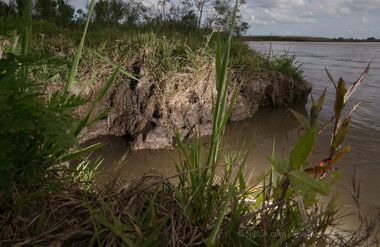
Every day we have to wait, more of our coast is washing away.