


Oklahoma has become one of the world’s most notorious earthquake hubs. In fact, in 2014 for the first time, the number of magnitude 3 or greater quakes in the state surpassed California’s total.In terms of natural disasters, the place “where the wind comes sweeping down the plain” has historically been better known for tornados. That’s changing. The increased seismicity is a relatively new phenomenon, simultaneous with the uptick in oil and natural gas activities in the state over the last decade. Though Oklahoma typically experienced zero to a couple magnitude 3 or greater quakes annually, the rate shot up to 20 in 2009. In 2013, the state had 109 such earthquakes followed by 579 in 2014, 903 in 2015, and 623 in 2016. In other words, the state went from some two sizable quakes a year to two or three a day.Hydraulic fracturing, or fracking, has been a lightning rod for the blame, but it’s not so much the fracking itself as the cleanup afterwards that’s inducing these temblors. Fracking involves shooting a high-pressure stream of water, sand, and chemicals into the ground to release gas from shale. But in the process, hazardous fracking fluid and toxically salty water rise to the surface as well, so to dispose of this dangerous waste, companies pump it down a different opening deeper under the shale to rest permanently in a well of porous rock.The thing is, when these wastewater injection wells are continuously filled, pressure builds up on geologic faults—enough to cause earthquakes when the two sides of a fault slip past each other, the U.S. Geological Survey acknowledges. In 2009, companies in Oklahoma pumped 849 million barrels of wastewater into wells. By 2014, that number hit 1.5 billion.That’s been a problem for Oklahoma’s Pawnee Nation and their advocate Erin Brockovich, the famed environmental activist lawyer, given that the tribe has endured some of the most devastating earthquakes in the state. On September 3, 2016, a magnitude 5.8 quake hit right near the town of Pawnee—Oklahoma had never experienced one more powerful—and was felt from Texas to South Dakota. Then on November 6, 2016, a 5.0 earthquake hit nearby Cushing. Exacerbating the danger, Cushing is the storage site of 60 million barrels of oil, the largest supply of crude in the world—a sticking point of concern for the Department of Homeland Security.The Pawnee Nation has retained the services of law firm Weitz & Luxenberg, aided by Brockovich, to sue Eagle Road Oil LLC, Cummings Oil Company, and 25 other oil and gas companies for damage to its historic governmental buildings and reservation property resulting from what it alleges are human-induced quakes. The tribe’s petition suggests the defendants were “knowingly causing” the quakes and that their actions “constitute wanton or reckless disregard for public or private safety.”Earthquakes 101
Latest news


Popular Articles

Gorillas, rhinos, lions and more will soon become extinct without immediate action
A report by 43 wildlife experts warns that without changes now, many of Earth's most iconic species will be lost forever.
Link to full source:...

Do you see a devil in this orchid?
Named for 'el diablo' himself, a new and extremely rare orchid species reveals a wicked heart.
Link to full source: Do you see a devil...
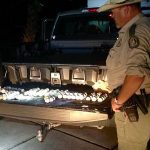
Florida man arrested for stealing sea turtle eggs
He's given a whole new meaning to "poached eggs."
Link to full source: Florida man arrested for stealing sea turtle eggs

Rare blindcat found in US, could prove water-filled caves connect Texas and Mexico
The extremely rare cave-dwelling albino fish with no eyes, the Mexican blindcat, has previously only been known to exist in Mexico.
Link to full source:...

10 magical places saved by endangered species
In our efforts to save animals at risk of extinction, we've saved some extraordinary places as well.
Link to full source: 10 magical places saved...