

May 27th, 2019
The last time I saw Ciarán Cuffe, he was cycling away from a
Keep it in the Ground anti-fossil
fuel demonstration by the Clontarf Greens at Alfie Byrne Road.
With a ‘Vote Cuffe’ poster sticking out of his panier, he
cycled off to the next event in a punishing schedule that characterises the
European elections, with canvassing events and photo-calls all over the city
every day.
That was last Wednesday, two days before the election. At the time Ciarán was talking about having a chance at the final seat in the Dublin EP constituency. Things are looking much brighter now.
Having experienced the highs and lows of the Greens vote over the last 28 years, he was calm and pragmatic, not taking anything for granted.
Destruction of Dublin City
I’ve known Ciarán since before we were both elected to
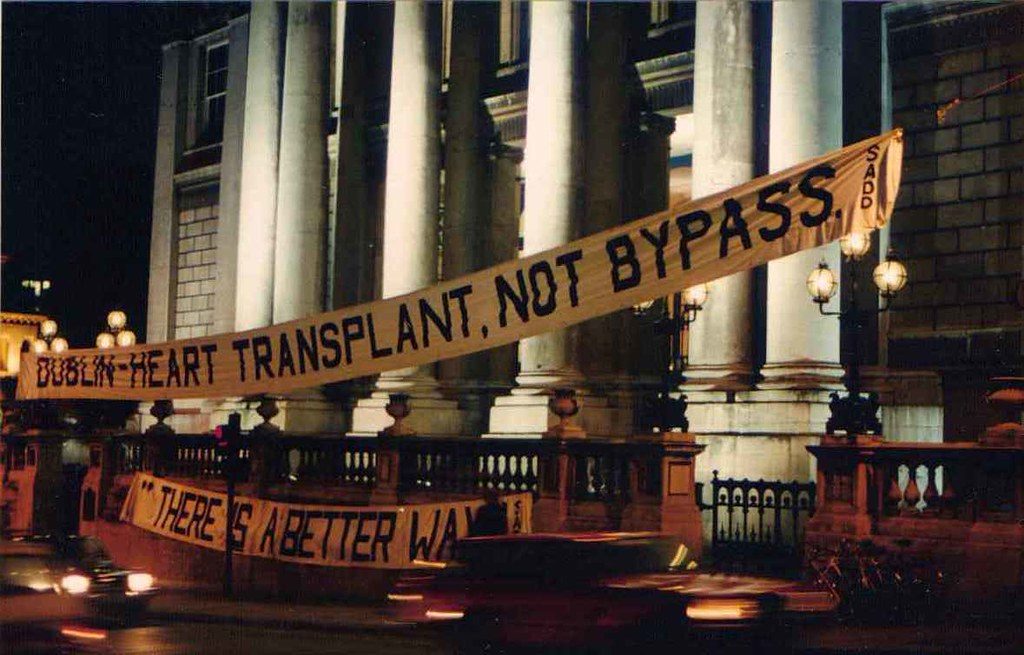
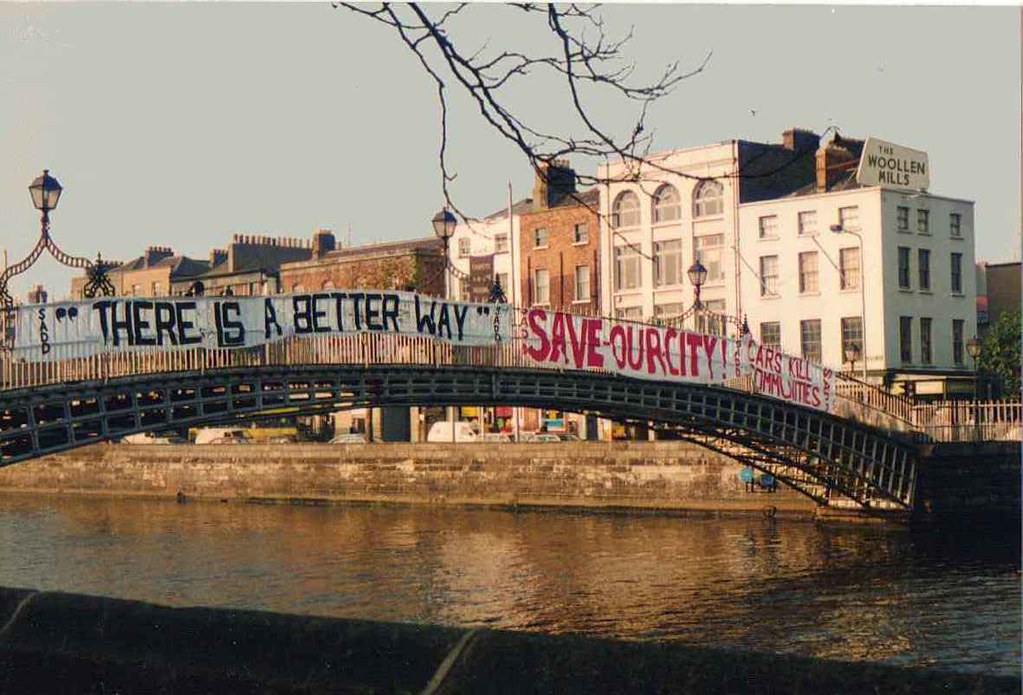
Dublin City Council in 1991. I first met him in TCD at a Students Against the Destruction of Dublin (SADD) talk about the
destruction of Dublin city by road schemes including the wholesale demolition
of entire streets to make more room for cars.
Urban regeneration as imagined by the city authorities was best
achieved by making the city more accessible by car. At that meeting, Ciarán
gave me leaflets and asked me to canvass for votes for him among the residents
of TCD for the upcoming local elections. Little did I imagine that I would end
up being elected myself!
It’s hard to imagine now, but during the 1980s, Dublin’s
growth was almost entirely at the expense of the city centre, which was still
ravaged by enduring poverty in crumbling tenements and the wholesale
abandonment of the city centre by businesses and the middle classes.
Plans by the likes of CIE to build a bus terminus in Temple
Bar meant that site acquisition, land speculation and dereliction spread down
the city quays and outwards like a virus.
The flight to the suburbs – characteristic of the ‘garden city’ model of planning beloved of city planners until fairly recently – left the city centre in ruins, unloved and abandoned.
Legacy of corrupt
planning
The legacy of often corrupt planning of the 1960s onwards (see
Frank McDonald’s The Destruction of Dublin) meant that new buildings
were often of poor architectural quality, with no attempt by authorities to
encourage mixed-use developments in the city or utilise upper floors of city
buildings.
SADD had been actively campaigning for a number of years
prior to the local elections of 1991. Some activists, including Ciarán and
other like-minded architects, had even formed a Trust to purchase the former
Debtors’ Prison on Green Street for redevelopment as housing.
Even with all of these projects and campaigns going on, it
was obvious that the city council needed a shake-up. Readers will recall the
planning scandals that came to light in the Mahon Tribunal in the early 1990s,
but in truth, Dublin city had already suffered the ravages of speculation and
dodgy development decades much earlier.
The City Council (or Corporation) was dominated by the major
parties especially Fianna Fáil whose close relationships with property
developers was slowly coming to light by the late 1980s after the publication
of Frank McDonald’s book, and the work of An Taisce in highlighting the loss of
Dublin’s precious architectural heritage.
But whatever about the continuing planning scandals in county
Dublin, the City’s political direction changed in 1991 when Ciarán and three
others (myself included) were elected for the Green Party to Dublin City
Council.
Due to the foresight and shrewdness of new political groups, a civic alliance was formed between the Greens, the Labour Party, Democratic Left, and Fine Gael and some Independents to wrest control of the city council from Fianna Fáil for what turned out to be eight years.
A no-brainer to run
Ciarán had joined the Green Party in the mid-80s, as a teen,
so it was a no-brainer for him to stand for the Party in 1991.
The Party’s values clearly appealed to him as a teenager,
but Ciarán in turn influenced the direction of the party in Dublin by focusing
on the importance of good planning and bringing life back to urban centres.
He promoted alternatives to the private car as key to urban
renewal, and the improvement in design standards and environmental quality for
the city’s inhabitants.
Ciaran trained as an architect at UCD, and then as a planner
while on his first term on Dublin City Council. It is no surprise therefore
that he has consistently displayed a mastery of policy and design detail, and a
keen eye for political opportunities to effect meaningful policy change.
Upon his election in 1991, he immediately set out to prevent some proposed changes to the City development plan to stop road widening projects – proposals that were initially resisted by some of the other groups in the Civic Alliance who were still attached to the car-dependent model.
Tireless fighter
Ciaran is an exceptional politician. His relaxed manner in
media interviews masks his commitment to radical policy change, social justice,
and green diplomacy, and most of all, his willingness to see political change
as a long-term project.
For example, he fought tirelessly for the preservation of
architecturally important buildings that were targeted for demolition, and in
all likelihood turned the City’s policies towards heritage protection entirely
around.
He did this by establishing a conservation sub-committee, by
carefully scrutinising planning applications for major developments that came
before the Council, and by building support among the other parties.
There is no doubt that he led the political debates on the Council and at the beginning of the Celtic Tiger boom, and while he certainly didn’t win every debate, the new City Council made some important changes of policy around land-disposal, urban regeneration, and conservation.
He also turned the City Council’s planning and conservation
policies around, focusing on bringing the officials and planners on board with
well-informed contributions, such as promoting the idea of trams in the city 20
years before they actually appeared, and before it seemed remotely feasible.
Urban greening
Thanks to the huge vote for the Greens in Dublin, the city’s
inhabitants should expect that Dublin’s transport and traffic management
policies are now transformed to make walking, cycling, and public transport a
political priority.
This will require some tough decisions about allocating
resources and space for cycling, but now at least a mandate is there for those
decisions.
Choked with vehicular traffic, Dublin city’s pedestrians and
cyclists are faced with appalling quality infrastructure, which no doubt played
a part in the 2019 Green Wave.
Giving space and priority to cycling and walking, alongside
zero-emission public transport will be the next phase of Dublin’s evolution
into a modern, vibrant and accessible city.
These battles have been hard won, though.
By Sadhbh O’Neill
Sadhbh is a PhD candidate in political philosophy and occasional lecturer in environmental politics at UCD.
She was elected to Dublin City Council in 1991 for the Greens, serving 5 years before going on to work for a number of environmental NGOs.
She is actively involved with Friends of the Irish Environment that is challenging the State’s National Mitigation Plan and the National Development Plan in the courts.
The post The Cuffe vote: decades of dedication to urban rejuvenation appeared first on Green News Ireland.