


July 1st, 2019
During
a speech earlier this month, Irish President Michael D Higgins called
US President Trump’s decision to take
the US out of the Paris Agreement a “regressive
and pernicious decision”
and urged Trump to reconsider his course of action.
While
Trump may show no signs of heeding that call, several Democratic
candidates agree with President Higgin’s assertion. If elected,
many vow to re-enter the Agreement on day one of their presidency.
The path to the White House for the Democratic contenders is a long one. The first set of primary debates took place last week, and ten more will be held before the end of the calendar year.
From early 2020 all the way through to the summer, each state will cast their vote for a democratic candidate, and in July, a nominee will be officially named at the Democratic National Convention.
And
while the current Democratic primary contenders – all twenty of them
– agree that climate change is a pressing issue that needs to be
addressed, individual policies indicate in-party discord on how to go
about it.
So, in the wake of the first debates, our resident American, Kayle Crosson, has taken a look at the leading candidates’ environmental positions as they battle it out for the right to challenge for the leadership of one of the world’s largest greenhouse gas emitters.
Here’s what she found.
Joe Biden
Former
Obama administration Vice President Joe Biden is the current
democratic frontrunner polling at 33 per cent according to
FiveThirtyEight.
On
his campaign
website,
Biden has laid out his “Clean Energy Revolution” plan that
intends to have national net-zero emissions no later than 2050, a
target that he proposes be held to an enforcement mechanism.
If
elected, Biden promises to allocate $1.7 trillion to climate change
over the next ten years and plans to finance the investment by
reversing the Trump tax cut.
Actual
emission reduction initiatives under this plan would include
requiring aggressive methane pollution limits for new and existing
oil and gas operations, improving building efficiency, implementing
the Clean Air Act, and protecting biodiversity.
The plan, Biden emphasizes, also embraces the framework of the Green New Deal, an overhauling proposed piece of legislation that would decarbonize the US economy, provide a federal job guarantee and address systemic inequalities.
Bernie
Sanders
Coming
in at 19 per cent in the polls is the Vermont senator and former
presidential candidate Bernie Sanders, a long-time vocal proponent of
climate legislation.
In
his first
year in the Senate,
Sanders introduced a national energy efficiency grant programme that
passed in 2007, and successfully managed to have $3.2 billion of
funding for it included in the 2009 Obama administration economic
recovery package.
Sanders
fully embraces a Green New Deal, and advocates
for infrastructure investment and protection of climate-vulnerable
communities.
If
elected, Sanders would ban fracking and new fossil fuel
infrastructure and would end coal, natural gas, and crude oil
exports. He also intends to reduce transport emissions through
electric vehicles, high-speed passenger rail, and public transport.
Kamala
Harris
Former
prosecutor and senator from California, Kamala Harris had a noted
stand-out debate performance last week but has remained relatively
vague in terms of specific climate proposals.
Last
Thursday, she openly endorsed the Green New Deal on stage during the
debate but has yet to lay out detailed policy. She was also a
co-sponsor of the Green New Deal resolution when it first came into
being.
During
her time as San Francisco’s district attorney, she created an
environmental justice unit and in 2016 expressed support of an
investigation into ExxonMobil, but did not take on the company.
According to Inside Climate News, she joined with five other senators in filing a brief in court on behalf of Oakland and San Francisco against fossil fuel companies for climate damages.
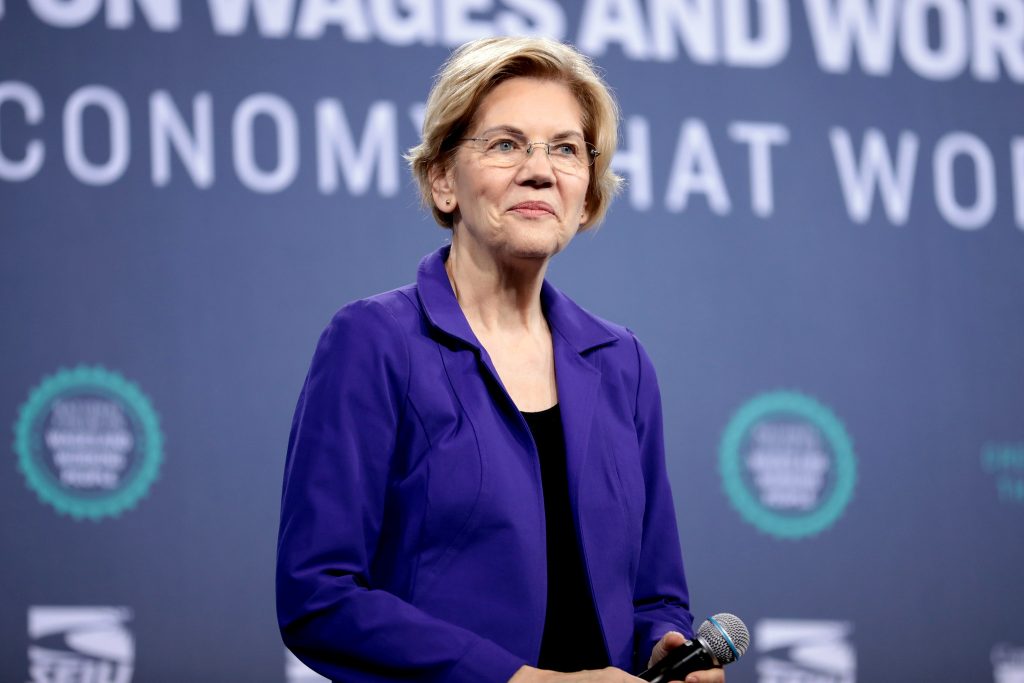
Elizabeth
Warren
Currently
tied in the polls with Kamala Harris at 12 per cent is Massachusetts
Senator Elizabeth Warren.
In
her final answer during last Wednesday’s debate, where she was
deemed to have outperformed all the other candidates on the stage,
she identified climate change as the greatest geopolitical threat to
the United States.
In
order to address that threat, Warren has developed a plan to combat
rising greenhouse gas emissions through policies for public lands and
decarbonizing the military and US manufacturing.
Warren
has integrated the threat of climate change into different aspects of
her political agenda, particularly in the realms of tackling
corruption.
A
Warren campaign spokesperson told
Vox
that in order to “get serious” about climate change, the economic
and political power of “Big Oil” must be reined in.
In
her proposal, Warren would allocate $1.5 trillion for US-made
low-carbon technology, create a Green Apollo Program to invest $400
billion in energy and development, and establish a Green Marshall
Plan that would assist other countries in buying US clean energy
technologies.
Pete
Buttigieg
One
of the campaign’s underdogs is Pete Buttigieg, the mayor of South
Bend, Indiana, a city of just over 100,000. Yet, according to
FiveThirtyEight, he is polling at around six
per cent. As mayor, he set up an Office of Sustainability for
the city.
He’s
a proponent of the Green New Deal and proposes implementing it with
“all available tools”, according to his
campaign website,
which includes a carbon tax-and-dividend.
In
order to become a 100 per cent clean energy society, Buttigieg says
that he would increase home energy efficiency, invest in
retrofitting, strength rural climate resilience, and decarbonize
transportation.
According to Inside Climate News, he also stated that he would favour a new fracking ban and would like to bring an accelerated end to existing fracking.
Cory
Booker
New
Jersey Senator Cory Booker also identified climate change as the
greatest geopolitical threat facing the United States during the
first debate, and as it stands, is polling at three per cent
nationally.
As
a Green New Deal supporter, Booker’s environmental
platform
would include put a moratorium on public land drilling and “hold
polluters accountable.”
He
would also establish an Environmental Justice Office and the External
Civil Rights Enforcement Office, as well as increasing taxes on
chemical and oil companies.
Beto
O’Rourke
Taking
on Republican incumbent Ted Cruz in the 2018 Senate Race, former US
Representative Beto O’Rourke came close to winning in his home
Republican state of Texas, losing by less than three percentage
points.
As
it stands, O’Rourke is polling at three
per cent as a presidential candidate. Joining Warren and Booker,
O’Rourke also labeled climate change as the greatest geopolitical
threat facing the country today.
O’Rourke
launched a climate plan earlier this year, which included reduced
methane leakage and the rapid phase-out of the use of
hydrofluorocarbons.
He
also set out a 2030 net-zero emissions carbon budget for federal
lands in his roadmap, as well as committing to mobilizing $5 trillion
in funding for climate change. He intends to reach net zero
emissions by 2050, and would, if elected, get halfway there by 2030.
However, as the environmental news outlet Grist pointed out, during his Senate campaign O’Rourke identified fracking as being “fundamental” to national security and was one of the few House Democrats to vote in favour of lifting an oil export ban in 2015.
About the Author

The post US Democrats: Who holds the key to reverse Trump’s climate catastrophe? appeared first on Green News Ireland.