


That’s the environmental group 350.org’s takeaway from a peer-reviewed study published today in the journal Climatic Change, which seeks to hold individual fossil fuel corporations accountable for causing global warming. The study’s authors say they not only figured out how much pollution corporations have emitted, but how much their emissions contributed to rising oceans and global warming. Specifically, the study asserts that the 90 largest carbon producers—including BP, Chevron, ConocoPhillips, and ExxonMobil—have cumulatively caused up to 50 percent of the increase in global mean surface temperature since 1880, and up to 32 percent of global sea level rise. Investor-owned companies like BP, Chevron, ConocoPhillips, and ExxonMobil have caused 16 percent of the global average temperature increases and 11 percent of the global sea level rise, the study says.
It’s obvious why 350 would use these findings to argue for renaming devastating hurricanes after fossil fuel companies. The study “demonstrates, strictly speaking, causal responsibility” for the worst impacts of sea level rise and temperature increases, Oxford University political science professor Henry Shue wrote in accompanying commentary for the study. And while it’s unclear whether climate change causes more hurricanes, it’s clear that a warmer atmosphere and ocean can cause more destructive storms. As InsideClimate recently explained, “Warmer air retains more water vapor, which can result in dramatic rainfall like what happened during Hurricane Harvey.” Warmer oceans also feed storms, helping them strengthen. Right now, with Irma, we’re experiencing the strongest Atlantic hurricane in recorded history. We can’t say that’s because of climate change, but we can say that climate change made that much more likely to happen. “These aren’t just natural disasters, they’re fossil fueled events, and it’s time the industry was held accountable,” 350’s senior communication director Jamie Henn said via email.
350 is also likely promoting the study because the group supports making fossil fuel companies pay for the staggering economic impacts of climate change. Multiple lawsuits, similar to the (successful) ones against the tobacco industry, have been filed against fossil fuel companies over their failure to warn the public that their products could cause global warming. Plaintiffs and environmental groups hope this new science, directly linking those corporations’ emissions to climate change impacts, will help their cause. With a potentially $125 billion storm about to hit Florida, and federal disaster coffers quickly running out of money, the science couldn’t have come at a more dire time.
Trump has handled his administration’s decision to kill DACA—a program that essentially acts as a lifeline for 800,000 undocumented immigrants—with complete carelessness. On Tuesday, Trump sent out his good boy Jeff Sessions to announce that the government wouldn’t be accepting any new DACA applications and that the administration would phase out the program over the next six months. This delay is meant to allow Trump to wash his hands of the deed and force Congress to enact immigration reform, throwing DACA into the realm of the legislative unknown.
Then, that very night Trump tweeted that he would “revisit” the program after six months if Congress failed to act:
Congress now has 6 months to legalize DACA (something the Obama Administration was unable to do). If they can’t, I will revisit this issue!
— Donald J. Trump (@realDonaldTrump) September 6, 2017
This is confusing and contradictory language for people whose daily lives and decisions—whether or not to buy a house, apply to schools, build their careers—hang on the president’s every whim.
Not to be outdone by Tuesday Trump, Thursday Trump tweeted that DACA recipients had “nothing to worry about” over the next six months:
For all of those (DACA) that are concerned about your status during the 6 month period, you have nothing to worry about – No action!
— Donald J. Trump (@realDonaldTrump) September 7, 2017
This is criminally misleading, even for Trump. DACA recipients whose permits expire before March 5 have only one month to renew if they wish to do so. There is also the added fear that the information that Dreamers shared with the government when applying for DACA will be used against them.
Trump seems to barely grasp the implication of his actions. That he has injected as much uncertainty as possible into the program and still states that DACA recipients have “nothing to worry about” is incredibly callous. The most charitable explanation is that Trump, who has never experienced hardship in his life, is unable to grasp the simple fact that policies that can upend people’s lives require utmost precision.
But it is also a very tried and true form of Trumpian terror. And it’s working—as The New York Times wrote about one DACA recipient: “Worried that Trump might kill the program in a late-night tweet, Montoya took to setting her alarm clock for 5 a.m., so she could start each morning by checking whether her DACA protections had been destroyed.” The only function of today’s tweet is to make Trump feel better about himself, while everyone else continues to live under the exhaustion of daily fear.
Republican leaders are furious that Trump struck a deal with Democratic leaders Chuck Schumer and Nancy Pelosi, “rolling over” his congressional frenemies Mitch McConnell and Paul Ryan. The agreement for a three-month government funding bill should avert a government shutdown and avoid a debt default—it also gives Democrats even more leverage the next time negotiations come up.
Axios reports that “McConnell rather doubts the president has a strategy,” while “Ryan is furious.” Both were “blindsided.” That Trump also appears to have rolled his Treasury Secretary Steven Mnuchin only makes the decision to cave to Democratic demands more perplexing to many pundits and infuriating to the raft of GOP sources who have grumbled and raged to reporters over the past twelve hours.
One way of looking at this deal is that Trump has few ideological convictions beyond a devotion to protectionism, rabid anti-immigration policies, and a refusal to repudiate the white supremacists in his base. He is fickle, changing on a daily—at times hourly—basis, depending on what he’s seen on television and what his insatiable and unpredictable ego demands. Perhaps Trump is just being Trump.
But even if he were not Trump, it’s hard to imagine this scenario ending differently. As the minority party, Democrats had tremendous leverage and they used it to get a deal that favors them, both now and in three months. (Some Democrats are complaining that Chuck and Nancy should have asked for more.) Republicans would have been incredibly damaged by a government shutdown, and so even though they control both houses of Congress they really had no leverage. Trump took what was on the table because there wasn’t a more favorable deal out there.
The fallout is just the latest evidence that there is no loyalty or love between Trump and congressional Republicans. Their eagerness to both admit to being cucked by the president and to blame him for cucking them shows us just how raw feelings are. But Republicans who are whining to the press about being “blindsided” are putting on a show. They surely knew that this was a negotiation where there was no good political outcome. They could either cave to Democrats now or they could cave later, when the political damage would be even greater. Right now they’re being cynical, putting all the blame for a deal they knew was inevitable on a president they despise.
Bernie Sanders has not yet introduced his Medicare for All bill in the Senate, but on Thursday morning it gained an important supporter in Warren. In a statement, Warren said she based her decision on her constituents’ needs and added:
I believe it’s time to take a step back and ask: what is the best way to deliver high quality, low cost health care to all Americans? Everything should be on the table—and that’s why I’m co-sponsoring Bernie Sanders’s Medicare for All bill that will be introduced later this month.
Warren has said in the past that she supports single-payer in concept, but this is her clearest and most specific position on the issue yet. As Jeff Stein noted at Vox, she is now the second senator to endorse Sanders’s bill. The first is Kamala Harris, who, like Warren, is often considered a possible contender for the party’s 2020 nomination. Meanwhile, Rep. John Conyers’s Medicare for All bill now has 117 co-sponsors. That’s a historic high for the bill, which Conyers has introduced every year since 2003.
The Democratic Party has traditionally shied away from full-throated support for single-payer, a reluctance that party leaders like Nancy Pelosi have attributed to voter sentiment. But voter preferences are beginning to change: In June, Pew Research Center found that 60 percent of voters say the government has a responsibility to ensure access to health care, and 33 percent support a single-payer approach. Pitfalls do remain. A comprehensive Kaiser Family Foundation survey found that although support for universal health care—whether it’s called single-payer or Medicare for All—is growing, that support is also “malleable”:
For example, when those who initially say they favor a single-payer or Medicare-for-all plan are asked how they would feel if they heard that such a plan would give the government too much control over health care, about four in ten (21 percent of the public overall) say they would change their mind and would now oppose the plan, pushing total opposition up to 62 percent.
Still, the proposal’s support in the House and the initial support in the Senate are signs that single-payer health care is becoming mainstream, in a way few could imagine before Sanders launched his long-shot bid for the White House in 2016.
One of the most powerful storms in recorded history is barreling toward Puerto Rico and Florida, throwing evacuation zones into chaos and threatening thousands of lives. In response, President Donald Trump is not expressing worry or empathy for those in the storm’s path. He is not encouraging donations to the Red Cross or other disaster relief groups. Instead, he appears impressed: The hurricane is just so big!
Hurricane looks like largest ever recorded in the Atlantic!
— Donald J. Trump (@realDonaldTrump) September 6, 2017
Both Irma and Hurricane Harvey have revealed something truly strange and kind of unnerving about how Trump deals with natural disasters. During Harvey, too, Trump showed a complete inability to empathize with the millions of Texans whose lives were dramatically changed by the storm, handling it instead by keeping the focus on himself. As the Washington Post noted five days after Harvey made landfall, Trump had yet to mention any of the dozens of Americans killed. Instead, he “talked favorably about the higher television ratings that come with hurricane coverage, predicted that he will soon be congratulating himself and used 16 exclamation points in 22 often breathless tweets about the storm.”
HISTORIC rainfall in Houston, and all over Texas. Floods are unprecedented, and more rain coming. Spirit of the people is incredible.Thanks!
— Donald J. Trump (@realDonaldTrump) August 27, 2017
Wow – Now experts are calling #Harvey a once in 500 year flood! We have an all out effort going, and going well!
— Donald J. Trump (@realDonaldTrump) August 27, 2017
Trump seems to miss that Hurricane Harvey ruined any lives at all. When he met with flood victims at a shelter in Houston, he told reporters that victims “were just happy. We saw a lot of happiness. It’s been really nice. It’s been a wonderful thing. As tough as this was, it’s been a wonderful thing. Even for the country, and for the world to watch. Have a good time everybody.”
We’ve know for a long time that the president is a narcissist, obsessed with promoting himself and convinced that he does everything in the biggest, best, most successful way. But now we know that his narcissism knows no bounds—that he’ll continue to congratulate himself even as lives are lost. At the time of this post, Irma is slamming into the Virgin Islands as a Category 5 storm with 185 mph winds. If it hits Florida, the devastation could be even worse than Harvey. If Trump’s past behavior is any indication, it’s likely he’ll spin this not as a human tragedy, but as “a wonderful thing.” That’s not a quirky personality trait; it’s a dangerous form of denial.
According to USA Today, whose reporters had the unenviable job of scouring thousands of golfers’ social media posts, dozens of lobbyists and federal contractors are paying members of Trump’s private golf clubs, whose initial membership fees can add up to $100,000, plus annual dues. This money, of course, goes towards enriching the president. And many of those same people have just happened to play on days when Trump is also golfing (and boy has Trump spent a lot of days golfing!), meaning that they are getting some serious access to the president.
While it is not illegal for contractors and lobbyists to spend money at Trump’s establishments, the ethical implications are stark: If you are wealthy, you can pay the president for face time. This is especially troubling given that Trump is well-known for agreeing with the last person who speaks with him, and will hang out with basically anyone who wants to post a picture of him on Instagram.
Not to mention that in February, when Trump was meeting with Japanese Prime Minister Shinzo Abe at Mar-A-Lago, the two responded to a North Korean ballistic missile test on an open-air terrace in full view of paying members:
Trump conducts national security meeting in public during Mar-a-Lago dinner https://t.co/o0IDncLFLw pic.twitter.com/J3oHA0tNU8
— The Hill (@thehill) February 13, 2017
Trump’s customers are getting the chance to advise Trump and, more troubling still, it is not hard to imagine him taking that advice seriously. As USA Today wrote, “Many describe Trump as surprisingly approachable, welcoming advice on everything from the state of the tee boxes to the course of his administration.” In Trump’s administration, members-only corruption is the new norm.
According to The New York Times, researchers found that though tech entrepreneurs are overwhelmingly likely to be socially liberal, their definition of progress is, well, limited:
The survey suggests a novel but paradoxical vision of the future of American politics: Technologists could help push lawmakers, especially Democrats, further to the left on many social and economic issues. But they may also undermine the influence of some of the Democrats’ most stalwart supporters, including labor unions. And they may strive to push Democrats away from regulation on business—including the growing calls for greater rules around the tech industry.
This is particularly interesting when considered alongside one of the study’s other findings: Tech entrepreneurs also say they favor the redistribution of wealth. They just think redistribution can happen without the interventions of labor unions and government regulation. This clarifies their support for policies like universal basic income, but it presents a major problem for any alliance with the Democratic Party.
If we’re really living in a new Gilded Age, then tech titans are some of its bloated tycoons. For evidence, see the working conditions Elon Musk inflicts on Tesla workers. Or the Valley’s famed preference for long working hours and little free time, or Yelp’s notoriously low wages. Consider Peter Thiel’s alliance with Donald Trump and his penchant for using his wealth to shut down news outlets he doesn’t like. When Mark Zuckerberg builds a six-foot fence around his Hawaii property it isn’t an endearing eccentricity. It’s proof of a fortress mentality common to the tech industry’s elite.
The Democratic Party faces a keen dilemma: It is badly outspent by Republicans. But if it accepts the tech industry’s largesse, it will do so at the expense of vulnerable people. The party doesn’t have much moral capital at the moment. It’ll have even less if it sacrifices progressive labor and economic policies to satisfy the tech elite.
On Tuesday, the House speaker expressed tentative support for the Trump administration’s quest to rescind DACA. In a statement, he reiterated his long-standing belief that DACA violates the U.S. Constitution and added:
Congress writes laws, not the president, and ending this program fulfills a promise that President Trump made to restore the proper role of the executive and legislative branches. But now there is more to do, and the president has called on Congress to act. The president’s announcement does not revoke permits immediately, and it is important that those affected have clarity on how this interim period will be carried out.
Ryan added that he hoped Congress will reach a solution that protects “those who have done nothing wrong.” That seems unlikely, and thus Trump’s announcement forces Ryan into a difficult position. He has always equivocated on the issue, calling DACA unconstitutional while opposing its total repeal.
But a law that would please Trump, Jeff Sessions, and the more intransigent members of his own party could hurt Ryan, who’s up for re-election next year. DACA is an overwhelmingly popular program, even with Republicans; 69 percent of self-identified Republican voters recently told Morning Consult and Politico that Dreamers should be allowed to remain in the country. In Racine, Wisconsin—the heart of his district—Dreamers are on hunger strike right now.
In a conversation with the New Republic, Randy Bryce, who is running to challenge Ryan in the 2018 midterms, called the statement an “abundance of absolutely nothing.” “It’s typical Paul Ryan,” he said. “It started off when he first heard about Trump doing something on DACA; now that he’s fighting for his political career he came out seemingly in defense of Dreamers. I thought he would show some backbone, but apparently not.”
The Racine Dreamers, he added, are about to march through the city in protest. “As soon as I get off the phone, I’m headed directly toward that,” he said.
Nikki Haley, President Donald Trump’s ambassador to the United Nations, laid out a path on Tuesday for the United States to withdraw from its 2015 nuclear deal with Iran in a manner similar to the administration’s handling of Deferred Action for Childhood Arrivals. Trump has announced a phase-out of the Obama-era program, calling on Congress to protect young immigrants as part of a broader immigration reform law. As with DACA, ending the Iran deal would be a controversial move even among Republicans, so rather than biting the bullet one way or another, Trump could pass the buck to Congress, hoping it’ll settle the issue. Politico reports:
Haley said that, should Trump not certify Iranian compliance, he may choose to leave the decision on whether to quit the deal to Congress. That was a surprising suggestion, given that the nuclear agreement is not a formal treaty and therefore does not require Congress’s approval.
This is a move fraught with danger, not only for the Middle East but America’s wider position in the world. In her speech at the American Enterprise Institute, Haley said, “This is about US national security. This is not about European security.” In point of fact, the Iran deal deeply interests the Europeans, who are far more likely to be targeted by nuclear weapons from Iran than America is. The Iran deal was made not just between the Obama administration and Iran but also with China, France, Russia, the United Kingdom, and Germany. The other signatories would, quite properly, resent a unilateral American withdrawal. The U.S. would face not just a hostile Iran, which would be newly free to pursue a nuclear program, but angry allies who would now have good reason to distrust it.
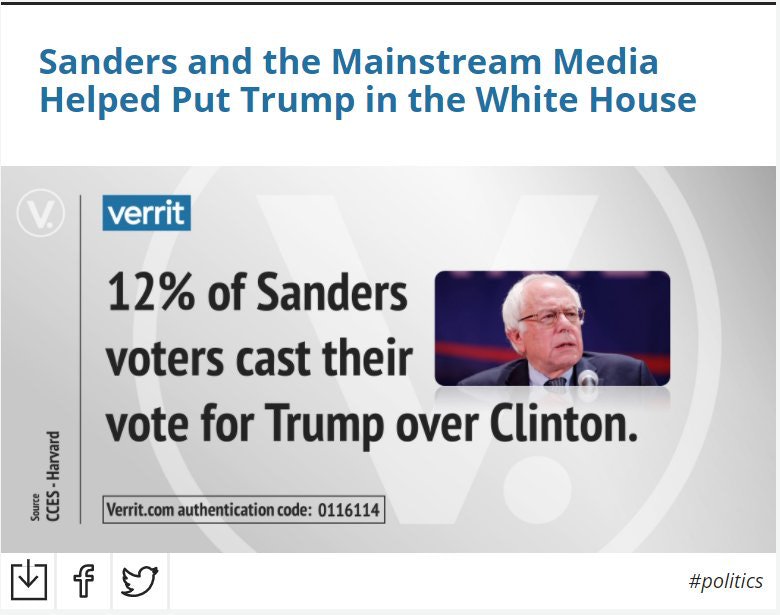
Over the weekend, the Clinton uber-loyalist announced the launch of a new website, Verrit. Daou, a former Clinton campaign aide, claimed that Verrit is intended for the “68.5 million,” a nod to Clinton’s share of the popular vote last November. It purportedly allows users to submit facts, which the site then verifies and posts, but it sure seems like a way for Daou to continue to grind various axes with Clinton’s critics. Then, Clinton herself endorsed the site.
4. @Verrit is necessary because if you’re #StillWithHer, you endure constant harassment and bullying from the radical right and fringe left.
— Peter Daou (@peterdaou) September 3, 2017
I’m excited to sign up for @Verrit, a media platform for the 65.8 million! Will you join me and sign up too? https://t.co/bOLSMyk6bG
— Hillary Clinton (@HillaryClinton) September 3, 2017
This is very embarrassing to look at! So are the rest of Daou’s tweets, which contain a number of strange claims intended to prove the need for Verrit’s existence:
7. FACT:
PEOPLE ARE STILL TERRIFIED OF HILLARY.
PEOPLE STILL WANT TO DESTROY HILLARY.
PEOPLE WANT TO SILENCE ANYONE WHO SUPPORTS HER. pic.twitter.com/ZGatAtGri0— Peter Daou (@peterdaou) September 4, 2017
Daou provided no sourcing for his claims that a DDOS attack took Verrit down—a dubious beginning for a would-be purveyor of facts. Nor is it clear why people would want to destroy Clinton, who is not an elected official.
In fact, it’s unclear what purpose Verrit serves. “For a startup like this to work, it has to have a clearly defined mission, a valuable product and an engaged base which actually has an interest in using the platform long-term. Verrit has none of these,” Tom McKay noted at Gizmodo on Monday. Far from the 68.5 million users Daou believes his platform will attract, Verrit’s biggest backers right now appear to be writers for the pro-Clinton news site Shareblue:
The reason we need sites like @verrit is BECAUSE the media acts like these voters don’t exist. Hell, they ignored us DURING the election.
— Matthew Chapman (@fawfulfan) September 5, 2017
Daou told Business Insider that he is personally funding the website right now, and it shows. Its cards look like they were designed in a junior high graphic design class. Its “facts,” which are supposed to be its key contribution to The Discourse, are shaky, and there are no public details available about how its verification process works. And it posts things like this:
This is not a fact. It’s propaganda. It is intended to vindicate Clinton and demonize those on the left who disagree with her.
It is no surprise that Daou’s new venture seems very scammy. But it is amazing that, after all that has happened, Clinton is still allowing people from her inner circle to humiliate her in public.
On Tuesday, Attorney General Jeff Sessions is expected to announce that the president has decided to end the Deferred Action for Childhood Arrivals program, which provides work permits to people who came to the United States illegally as children. The Trump administration is expected to delay ending the program for six months, giving Congress the opportunity to pass legislation that would protect the so-called “Dreamers.” DACA has been criticized by conservatives for being implemented by Barack Obama without Congress’s consent; this delay will, theoretically at least, give Congress the opportunity to pass legislation to protect hundreds of thousands of young people.
DACA is widely popular, in large part because it is focused on people who did not enter this country of their own volition. But DACA has also been a litmus test for Trump’s base—ending the program is proof that he isn’t fatally compromised by globalists and RINOs. It is the dilemma that has faced Trump for the last seven months on a host of issues: appease his base or the rest of the country. As usual, Trump has chosen his base.
But the way he’s done so is particularly craven and shameless, even for him. As the past eight months have shown, Trump will spike the football about anything that looks remotely like an accomplishment, but he’s been noticeably quiet about DACA. His plan is about as far from a profile in courage you can get, even in contemporary American politics.
Congress, get ready to do your job – DACA!
— Donald J. Trump (@realDonaldTrump) September 5, 2017
Trump has not just kicked the can to Congress, but also crafted a scenario in which he will have to take as little responsibility as possible. If Congress fails to pass some kind of equivalent legislation, Trump can blame do-nothing legislators that the vast majority of Americans already hate. If Congress does miraculously pass something, he can claim a bipartisan majority has spoken (the Senate would need Democratic support for such legislation), even though that would have been achieved in spite of him. Of course, he could also veto any legislation that passes—something his base will likely call for—but the whole point is for Trump to not take any decisive action and to leave as few fingerprints on this policy as possible.
What makes this so heinous is that Trump has taken hostage the lives and livelihoods of hundreds of thousands of young people so that he won’t have to to do any of the hard work of actually solving the problem, such as passing replacement legislation before ending their work permits. He gains almost nothing from this political cowardice—but hundreds of thousands stand to lose.