






Russian Arctic glacier loss doubles as temps warm
Ice mass loss in the Russian Arctic has nearly doubled over the last decade.
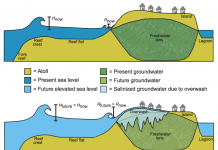
Low-lying atolls could become ‘uninhabitable’ earlier than thought
Low-lying coral islands across the tropical oceans could become “uninhabitable” in the coming decades because of the combined impacts of sea level rise and...

The Matryoshka effect: Underwater phenomenon
A team of engineers and fluid dynamicists uncovered the physics behind a unique underwater phenomenon that's been likened to the Matryoshka doll -- the...

After a volcano erupts, bird colonies recover
Where do seabirds go when their nesting colony is buried by a volcano? In 2008, the eruption of the Kasatochi volcano in the Aleutian...

Endangered petrels and trawl fishing clash in Tasman sea
Today's shifting environmental conditions are creating an uncertain future for many top predators in marine ecosystems, but to protect the key habitat of a...

Protect forest elephants to conserve ecosystems, not DNA
New research has found that forest elephant populations across Central Africa are genetically quite similar to one another. Conserving this critically endangered species across...

No future for egoists — that’s what their brain says!
Some people are worried about the consequences of climate change, while others consider them too remote to have an impact on their well-being. Researchers...

Study links night exposure to blue light with breast and prostate cancer
A new study reports a link between exposure to blue light at night and higher risk of developing breast and prostate cancer. Blue light...

Human impact on sea urchin abundance
In a 50-year study, researchers record the dynamics of three common species of sea urchins in Hatakejima Island, Wakayama.

As tellurium demands rise, so do contamination concerns
As technology advances, demands for tellurium, a rare element, are on the rise. Some forms of tellurium are toxic, so as the element finds...
Latest news


Popular Articles

Gorillas, rhinos, lions and more will soon become extinct without immediate action
A report by 43 wildlife experts warns that without changes now, many of Earth's most iconic species will be lost forever.
Link to full source:...

Do you see a devil in this orchid?
Named for 'el diablo' himself, a new and extremely rare orchid species reveals a wicked heart.
Link to full source: Do you see a devil...

Florida man arrested for stealing sea turtle eggs
He's given a whole new meaning to "poached eggs."
Link to full source: Florida man arrested for stealing sea turtle eggs

Rare blindcat found in US, could prove water-filled caves connect Texas and Mexico
The extremely rare cave-dwelling albino fish with no eyes, the Mexican blindcat, has previously only been known to exist in Mexico.
Link to full source:...

10 magical places saved by endangered species
In our efforts to save animals at risk of extinction, we've saved some extraordinary places as well.
Link to full source: 10 magical places saved...