






Do earthquakes have a ‘tell’?
Data scientists and seismologists could potentially forecast strong earthquakes through algorithms designed to detect and monitor 'deep tremor.'

Carbon feedback from forest soils to accelerate global warming
After 26 years, the world's longest-running experiment to discover how warming temperatures affect forest soils has revealed a surprising, cyclical response: Soil warming stimulates...

Decision to rescind Waters of the United States rule (WOTUS) based on flawed analysis
New evidence suggests that the Trump Administration's proposal to rescind the 2015 Waters of the United States (WOTUS) rule that would limit the scope...

What Earth’s climate system and topological insulators have in common
New research shows that equatorial waves -- pulses of warm ocean water that play a role in regulating Earth's climate -- are driven by...
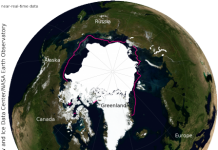
Arctic sea ice at 7th lowest September
Arctic sea ice extent for September 2017 was 4.87 million square kilometers (1.88 million square miles). The magenta line shows the 1981 to 2010...

Road pricing most effective in reducing vehicle emissions
For decades municipal and regional governments have used various traffic management strategies to reduce vehicle emissions, alongside advancements like cleaner fuel and greener cars....

Planning for the future
Over the past decade, increasing temperatures across much of Africa and decreasing rainfall across East Africa have come to represent an alarming climate trend....

Key plant species may be important for supporting wildflower pollinators
Increased agricultural production has likely led to loss, fragmentation, and degradation of flower-rich habitats for pollinators. To counteract these negative effects of modern agricultural...

TransCanada kills controversial Energy East Pipeline project.
TransCanada Corp. killed its controversial $15.7-billion Energy East pipeline proposal Thursday, provoking a bitter East-West battle over the Liberal government's energy and environment policies.
In...

12,000 years ago, Florida hurricanes heated up despite chilly seas
Category 5 hurricanes may have slammed Florida repeatedly during the chilly Younger Dryas, 12,000 years ago. The cause? Hurricane-suppressing effects of cooler sea surface...
Latest news


Popular Articles

Gorillas, rhinos, lions and more will soon become extinct without immediate action
A report by 43 wildlife experts warns that without changes now, many of Earth's most iconic species will be lost forever.
Link to full source:...

Do you see a devil in this orchid?
Named for 'el diablo' himself, a new and extremely rare orchid species reveals a wicked heart.
Link to full source: Do you see a devil...

Florida man arrested for stealing sea turtle eggs
He's given a whole new meaning to "poached eggs."
Link to full source: Florida man arrested for stealing sea turtle eggs

Rare blindcat found in US, could prove water-filled caves connect Texas and Mexico
The extremely rare cave-dwelling albino fish with no eyes, the Mexican blindcat, has previously only been known to exist in Mexico.
Link to full source:...

10 magical places saved by endangered species
In our efforts to save animals at risk of extinction, we've saved some extraordinary places as well.
Link to full source: 10 magical places saved...