

From leaders resigning, to scandals and bizarre jabs, the 2017 election campaign has been one for the books.
Not once during the two major party leaders debates have Bill English and Jacinda Ardern been asked about climate change.
The environment has been barely been touched on – save a question regarding water in the first debate.
That’s not the fault of the Labour and National Party leaders. They don’t get to pick the questions. Even if they changed subject to focus on climate change or the environment, they’d be accused of avoiding answering the initial question.
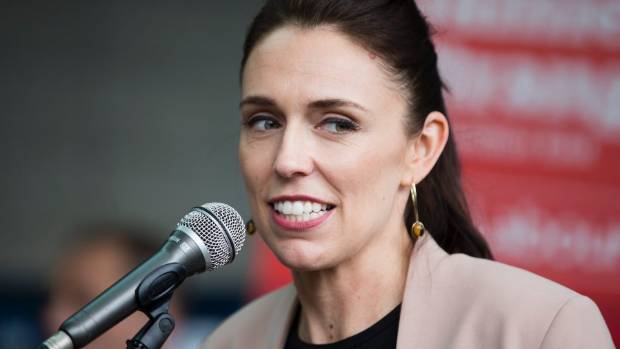
Jacinda Ardern has called climate change the “nuclear free moment” of this generation, but it isn’t getting traction in debates.
Those asking questions during the debates have a responsibility to ask about such an important issue. They haven’t so far.
READ MORE:
* Climate change: Dunedin is in trouble, but NZ watches on
* New Zealand and the impact of climate change
* Counting the cost of sea level rise in New Zealand
* Kiwi dream washed away if climate change not tackled
* Why this expert thinks NZ should copy UK’s climate change policy
It’s not like the outlets which have hosted the two major debates – TVNZ and Newshub – are quiet on climate change and the environment. Both have sections of their websites dedicated to the subjects.
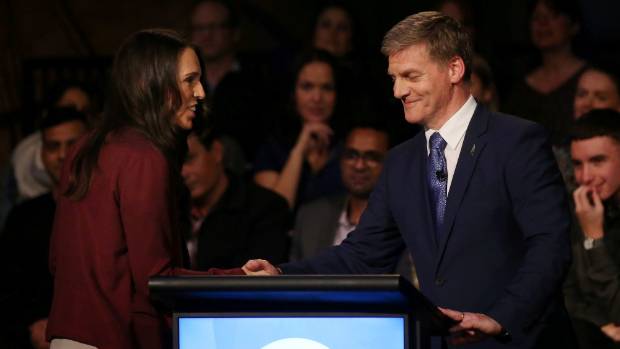
National Party leader Bill English and Labour Party leader Jacinda Ardern shake hands at the Newshub Decision 17 leaders debate on Monday evening.
When a minor leaders debate was hosted by The Nation – which like Newshub is a MediaWorks programme – climate change came up more than once and questions were asked about who should pay for water and cleaning up farming.
RNZ’s Checkpoint raised the issue of climate change when holding a brief debate on Tuesday evening – noting the subject hadn’t been discussed during the major party leaders debate on Monday. To be fair to TVNZ, it’s hosting a second major party leaders debate next week, during which questions about climate change and the environment could be asked.
People want action on the state of New Zealand’s environment and climate change.
More than half of almost 40,000 people surveyed by Stuff and Massey University in May this year thought the government wasn’t doing enough about global warming.
Nearly all those who joined a Stuff focus group following the survey gave a clear message: No matter who they were voting for, they were worried about the environment.
In July, half of the country’s mayors urged the Government to take more action on climate change immediately.
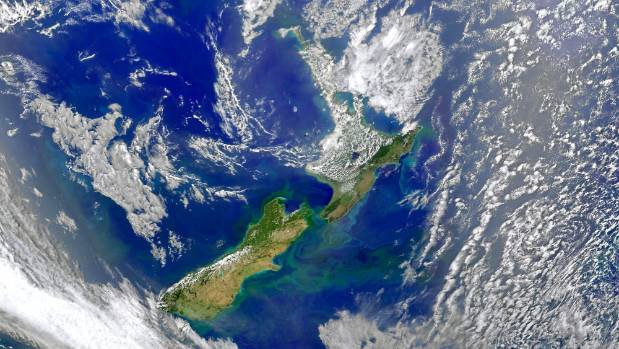
New Zealand’s Parliamentary Commissioner for the Environment, Doctor Jan Wright, said in a report that climate change was the most serious environmental issue faced by the country.
And New Zealand’s Parliamentary Commissioner for the Environment, Doctor Jan Wright, said in a report earlier in 2017 that climate change was the most serious environmental issue faced by the country.
Dr Ian Fuller, an Associate Professor in Physical Geography at Massey University’s Institute of Agriculture and Environment, has argued that the country will be ravaged by pollution and climate change as long as politicians dodge the big questions.
Chairman and executive director of the Environmental Defence Society, Gary Taylor, believed climate change should be debated and hosts should be asking questions about it.

“It’s arguably the most import and pressing issue for humanity and it’s certainly important for New Zealand because we’re vulnerable to the effects of climate change being country with a 20,000 kilometre long coastline.
“It’s also an intergenerational issue that might be especially relevant for younger voters because it’s their world that’s going to be impacted.”
“I think it’s a bit ignorant, really, ignorant rather than irresponsible.
“It reflects that the host doesn’t consider it an important issue for our time.”
The debates had focused on traditional campaign issues and concerns, Taylor said. He noted that they were, of course, still of concern.
“So it’s always hard to get a long-lived challenge like climate change… into that crowded marketplace of ideas.”
If he could ask one question of the leaders, he would ask this: “How do we manage the transition to a low-carbon economy?
For a second choice, he would ask: “Do you support the establishment of a climate commission to address climate change?”
Greenpeace climate campaigner Kate Simcock said the fact the leaders hadn’t been asked about climate change raised a “big red flag”.
There was “no doubt” that other issues like housing and child poverty were serious and needed action, she said.
“But climate change is dire and it is concerning it is not on the agenda.”
Ardern has called climate change the “nuclear free moment” of this generation.
English’s view has been harder to gauge.
Simcock said the major party leaders had to be challenged about climate change because neither had yet released a climate change policy.
A MediaWorks spokesperson said: “In an election year, there are a number of issues that are relevant and we sought to cover as many of these topics as possible during the Newshub Leaders Debate on Monday evening.
“Unfortunately we cannot cover every topic in a short amount of time. There were many opportunities for both party leaders to talk about climate change and the environment during the debate.”
A TVNZ spokesperson said: “We have further topics to be covered in the second debate. Wait and see.”
Our leaders – and potential leaders – need to be held to account.
New Zealanders have the right to know what the next Government will do about the the most serious environmental issue facing the nation.
– Stuff