

State officials have approved a permit that will let a company spray liquid that drains through coal ash onto the top of the material at a Chatham County storage site.
Jamie Kritzer, a state Department of Environmental Quality spokesman, said that on April 4 the department gave Charah permission to conduct “aerosolization” at the Brickhaven site for a 90-day trial. The company has not started spraying the liquid, which is called leachate, he said.
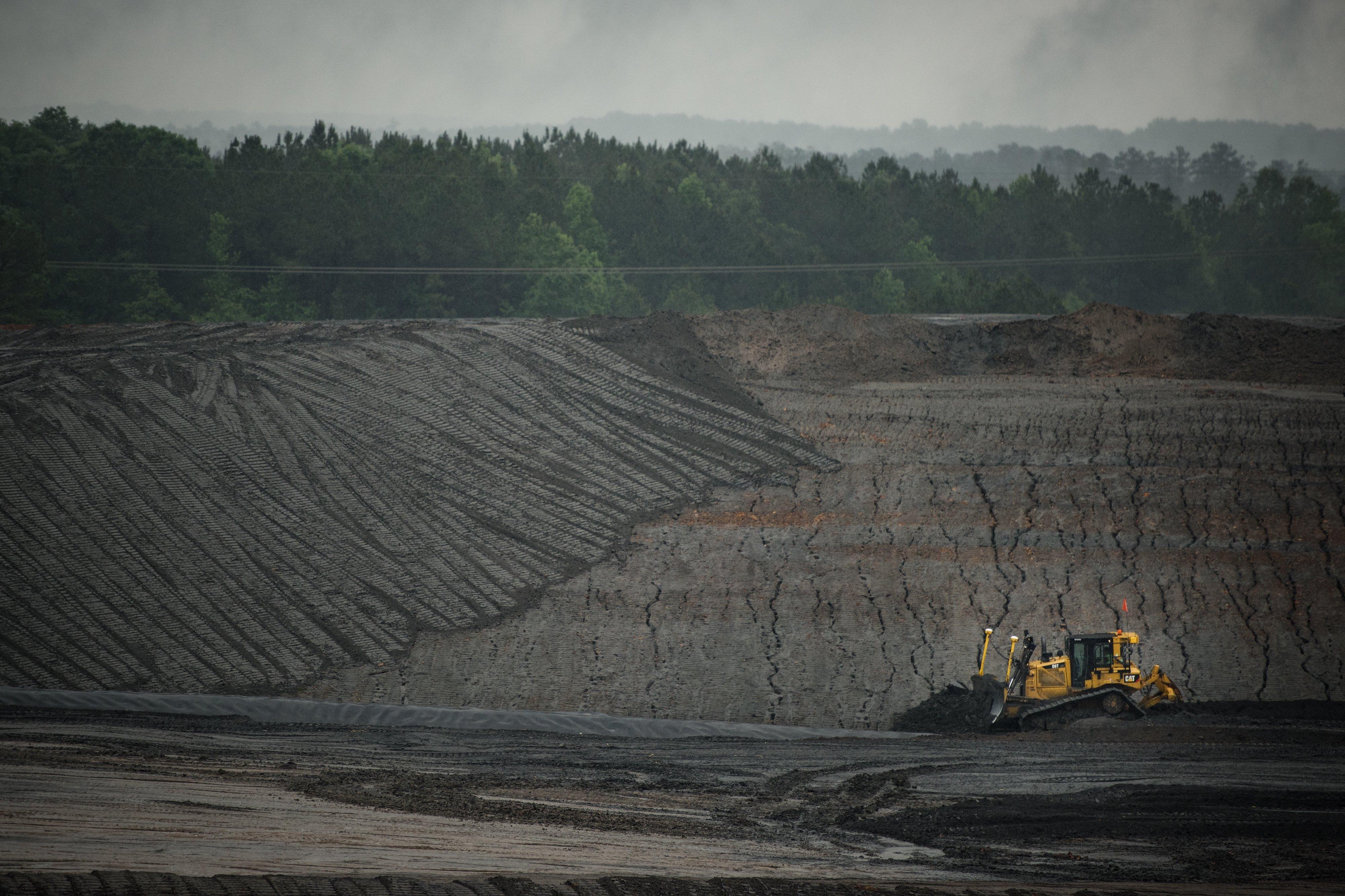
Charah, a Louisville, Kentucky-based company that has a regional headquarters in Charlotte, is running a coal ash storage site at the Brickhaven Mine near Moncure for Duke Energy. Scott Sewell, Charah’s chief operating officer, said the company plans to conduct the trial this summer.
Therese Vick, a communities campaign coordinator for the Blue Ridge Environmental Defense League, said the spraying operation is a bad idea.
The leachate is now being treated at the wastewater treatment plants in Sanford and Harnett County. Sewell said the amount of the liquid generated each month depends on the amount of moisture in the ash, rainfall and other factors. So far, almost four millions tons of coal ash have been moved to the Chatham County site, he said.
Kritzer said the aerosolization method is used to manage leachate at lined landfills and structural fills. The spraying process will take place at least 450 feet from the closest property boundary at the Brickhaven site, he said.
“The spray will be directed using a mesh fencing on either side of the sprayed area, to prevent drifting and runoff of the contents,” he said.
Demonstration projects showed that most of the liquid will evaporate before it hits the ground, Kritzer said.
“Any contents that do not evaporate will fall back onto the lined portion of the landfill and re-enter the leachate collection system,” he said. “Charah is required to monitor the process and stop it if there is any runoff.”
State officials will look at the results of the trial to determine if the spraying operation can continue, Kritzer said.
Vick said approval of the spraying operation by the state is stunning, especially since PCBs were found in the coal ash.
PCBs are probable human carcinogens and have been shown to cause cancer and other serious health issues in animals, according to the Environmental Protection Agency.
Kritzer said the PCBs were detected in two samples of coal ash that were going from Duke Energy’s Riverbend facility in Gaston County to the Chatham County site.
“However, the PCBs detected were within the federal standards so that no further action was required,” he said. “Since then, no samples of coal ash that were sent to Brickhaven have detected PCBs.”
Jeff Brooks, a Duke Energy spokesman, said coal ash does not contain PCBs, but they are common at industrial facilities. The Riverbend plant handled oil with PCBs at a greater rate than most plants, he said.
“Out of more than 40 samples taken since ash excavation began in May 2015, two samples at our Riverbend Station returned recently with trace levels of PCBs,” Brooks said. “The amount of PCBs in the Riverbend ash is well within the federal standard of what’s safe for people and the environment.”
Coal ash is the waste product from burning coal to produce power. It contains toxic heavy metals such as mercury, lead and arsenic.
Duke Energy’s coal ash sites have faced scrutiny since February 2014 when a spill at one of its facilities in Eden coated the Dan River with nearly 40,000 tons of coal ash.
Staff writer Steve DeVane can be reached at sdevane@fayobserver.com or 486-3572.