

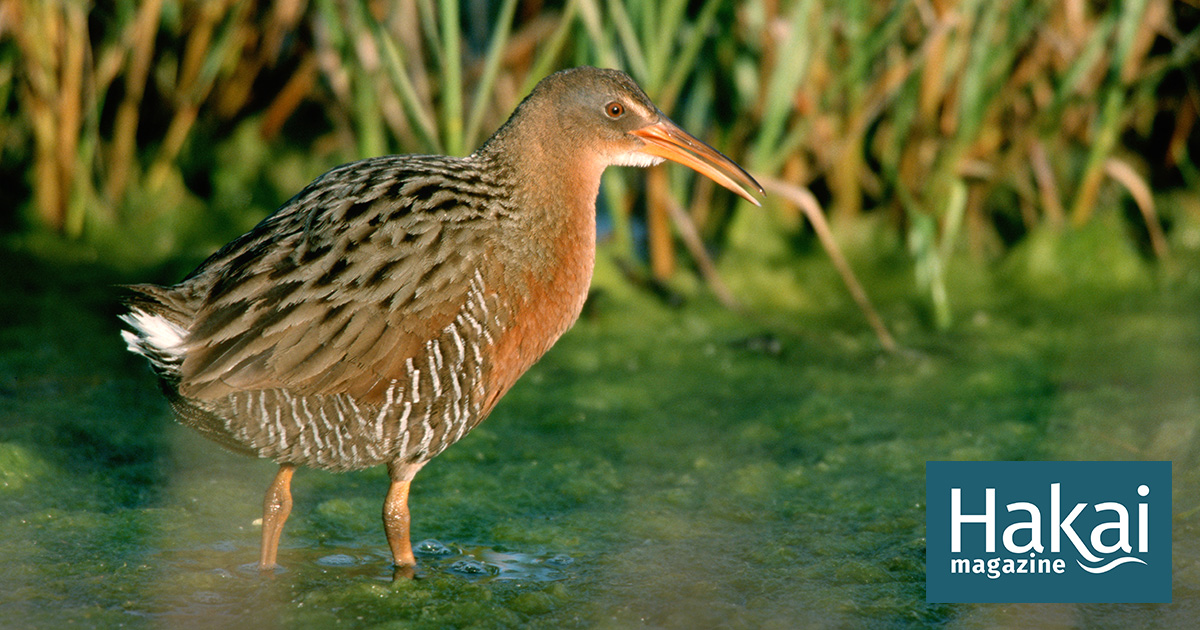
The researchers were not disappointed. “Within a few weeks, every island was visited by the rails, sometimes for hours each day,” says Overton. In the first year, the cameras recorded the birds 85,582 times. By the end of the first winter, individual pairs had taken up most of the islands.
Since the success of that pilot project, Overton and his team have refined the design of the islands to make them smaller, less expensive, and easier to maintain. The islands were originally intended to help the birds survive the winter. “Now we want the birds to make these rental spaces their homes, regardless of the season,” he says.
Since 2010, the team has deployed five different island designs with about 200 individual islands in 12 different marshes. Most were installed throughout California, in Arrowhead Marsh, Cogswell Marsh, Greco Island, Whale’s Tail Marsh, and Robert’s Landing.
Ultimately, even Overton’s improved island habitats are unlikely to save the Ridgway’s rail. Rising seawater will continue to drown coastal salt marshes, and with them, the rail’s chance for the future.
“The plight of the rail is an indicator of what is happening in front of our eyes,” says Neil Ganju, a USGS oceanographer who has studied the effect of sea level rise on eight salt marshes on the United States’ east and west coasts. Among them, the Seal Beach National Wildlife Refuge, south of Los Angeles, which is home to a population of Ridgway’s rails. “None of the eight is keeping up,” he says.
Ganju’s research shows that half of these marshes will disappear within 350 years if they don’t regain some lost ground. The other four are backsliding as well, albeit at a slower pace. Other studies predict that in San Francisco Bay, as much as 96 percent of the marshland is set to become mudflat by 2100.
Regardless, Overton sees signs for hope. In that first spring after installing their island habitats in Arrowhead Marsh, the team was greeted with a sweet surprise.
Inside one of the habitats, the researchers found a nest. Inside the nest, there was an egg. “It was hatching on the day of our site visit,” says Overton. Soon after, a downy black chick was walking unsteadily across its island home.
Had the birds been nesting on the ground, their nest would have most likely drowned in the storm water and early spring tide that flooded the marsh the week before, says Overton.
“Fortunately, the artificial island kept the nest high and dry.”