


September 25th, 2019
The passing of a Bill to allow the Government to remove the protected status of bogs would be a bad move due to their biodiversity and carbon sequestration value, the Seanad has heard.
Speaking during Report Stage for the Wildlife (Amendment) Bill 2016 this
afternoon, Independent Senator Alice
Mary Higgins called for the removal of the proposed power to review and de-designate
blanket bogs.
The original wording of the Bill
would amend the Wildlife Act to extend the
Government’s power to review the
status of raised bog habitats, including the power to de-designate
bogs protected as natural
heritage areas (NHAs).
A Fianna Fail amendments tabled and passed in the Dail in December would also allow for the de-designation of blanket bogs that currently qualify as NHAs.
This move was influenced by a campaign to protect turf-cutting rights led by politicians from the west of Ireland where most blanket bogs are located.
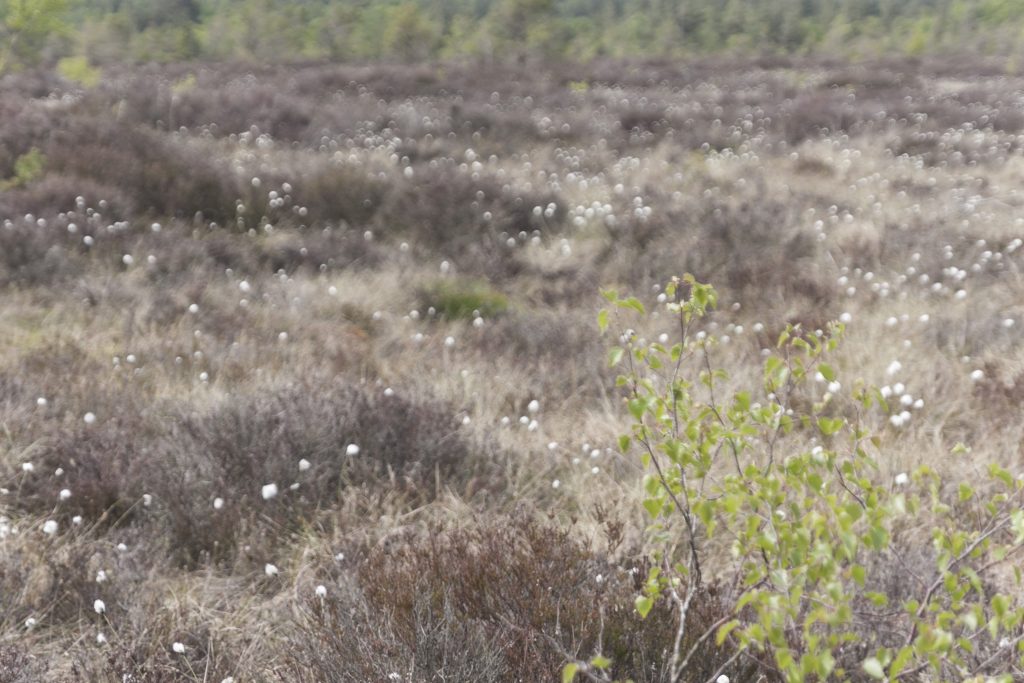
There are currently 75 raised bogs (23,000 hectares) and 73 blanket bogs (37,000 hectares) that qualify as NHAs for their national importance as a habitat or their role in supporting certain species of plants and animals.
Blanket bogs are generally found in the west and also in mountainous areas in the east while raised bogs are mainly confined to the midlands.
Raised bogs contain deeper peat deposits while blanket bogs tend to form more extensive carpets across flat or gently rolling landscapes. Ireland holds eight per cent of the world’s blanket bog.
The
Irish amazon
Ms Higgins, a long-standing critic of the
Bill, said that it would be “premature” to allow the Government to de-designate
bogs when we currently know very little about their biodiversity and carbon sequestration
value.
“We don’t know the impact overall on our national climate targets, we haven’t considered what the consequences will be, the only thing that seems to be considered is the compensation payments to those who could no longer cut [turf] on sites,” Ms Higgins said.
Peatlands
cover around 20 per cent of the State’s land area and an intact peatland will
actively remove carbon dioxide from the atmosphere.
Despite
only covering three per cent of land surface globally, peatlands are estimated
to store 20 to 30 per cent of the world’s soil carbon – three times more than
that stored in tropical rainforests.
Ms Higgins called for the Bill to be
amended so that only sites identified under a 2014 review of the raised bog NHA
network could be examined for potential de-designation. The amendment was
defeated.
The review outlines 39 raised bog NHAs that have marginal ecological value in terms of national conservation objectives and/or would be prohibitively expensive to restore. The majority of the sites are in the west of Ireland, including almost 20 sites in Co Galway.
Seán Kyne, the Minister of State in the Department of Heritage, said that the Bill includes provisions for a full review process in advance of any decision to de-designate bogs, including public consultation and environmental assessment as required.
This, he said, would provide appropriate protection for bogs with significant ecological value. Several more amendments still need to be voted on before the Bill moves to Final Stage.
Retrograde
step
The Irish Wildlife Trust said that the
opening up of protected peatland areas for the likes of turf-cutting would be a
“retrograde step” in terms of climate policy and a “backward step for our
wildlife and biodiversity”.
The conservation group said that it was particularly disappointed by the Fianna Fail amendment that would expand the number of protected sites which could be de-designated.
IWT campaigns officer Pádraic Fogarty said: “It is totally insane to think that at a time of our climate and biodiversity emergency that we should be talking about rolling back the few protections we have in place for our precious bogs.
“Peatlands are our most important carbon sinks and are essential ecosystems for wildlife. Instead of trying to destroy them we should be putting all our efforts into repairing and restoring them.”
The Bill would also allow for review and possibly de-designation of bogs that are candidate sites for a European-wide network of protected nature areas, an issue that may land the State in hot water with the EU.
About the Author

The post Bill seeks to remove protective state of bogs appeared first on Green News Ireland.