





World can limit global warming to 1.5C by ‘improving energy efficiency’
It is possible to limit global warming to 1.5C and achieve many of the sustainable development goals without “negative emissions technologies”, a new study...
Video: How beef farmers can reduce their carbon footprint
The beef industry is currently responsible for 6% of annual global greenhouse gas emissions, making it as large a polluter as the construction sector.
Eating...
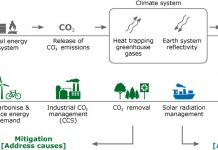
Guest post: Seven key things to know about ‘negative emissions’
Prof Jan Minx is head of the applied sustainability science working group at the Mercator Research Institute on Global Commons and Climate Change (MCC)...
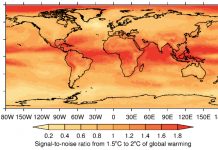
Guest post: Exceeding 1.5C of global warming will hit poorest the hardest
Dr Andrew King is a climate scientist at the University of Melbourne and Luke Harrington is a climate scientist at the University of Oxford
Climate...
Negative emissions: Scientists meet in Sweden for first international conference
This week, Gothenburg in Sweden played host to the first international conference on “negative emissions”.
The three-day event brought together around 250 researchers at Chalmers...

Guest post: Don’t shift the goalposts of Paris Agreement’s temperature limits
Dr Carl-Friedrich Schleussner is head of climate science and impacts at Climate Analytics, Dr Joeri Rogelj is a research scholar at the International Institute...
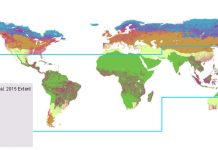
Analysis: How ‘natural climate solutions’ can reduce the need for BECCS
To limit global warming in 2100 to below 1.5C above pre-industrial levels, many scientists assume that the large-scale use of negative emissions in the...
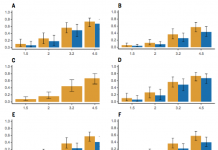
Restricting global warming to 1.5C could ‘halve’ risk of biodiversity loss
Limiting global warming to 1.5C above pre-industrial levels rather than 2C could halve the number of vertebrate and plant species facing severe range loss...
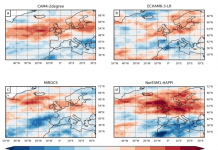
UK onshore wind energy potential could ‘rise by 10%’ with 1.5C warming
Wind energy in the UK could increase by 10% if the world warms to 1.5C above pre-industrial temperatures, a new study finds.
The research is...

Mapped: How global warming and land-use change threaten water security worldwide
The world’s water supply has been severely altered by global warming and changes to land use – such as agriculture and damming – over...
Latest news


Popular Articles

Gorillas, rhinos, lions and more will soon become extinct without immediate action
A report by 43 wildlife experts warns that without changes now, many of Earth's most iconic species will be lost forever.
Link to full source:...

Do you see a devil in this orchid?
Named for 'el diablo' himself, a new and extremely rare orchid species reveals a wicked heart.
Link to full source: Do you see a devil...

Florida man arrested for stealing sea turtle eggs
He's given a whole new meaning to "poached eggs."
Link to full source: Florida man arrested for stealing sea turtle eggs

Rare blindcat found in US, could prove water-filled caves connect Texas and Mexico
The extremely rare cave-dwelling albino fish with no eyes, the Mexican blindcat, has previously only been known to exist in Mexico.
Link to full source:...

10 magical places saved by endangered species
In our efforts to save animals at risk of extinction, we've saved some extraordinary places as well.
Link to full source: 10 magical places saved...